
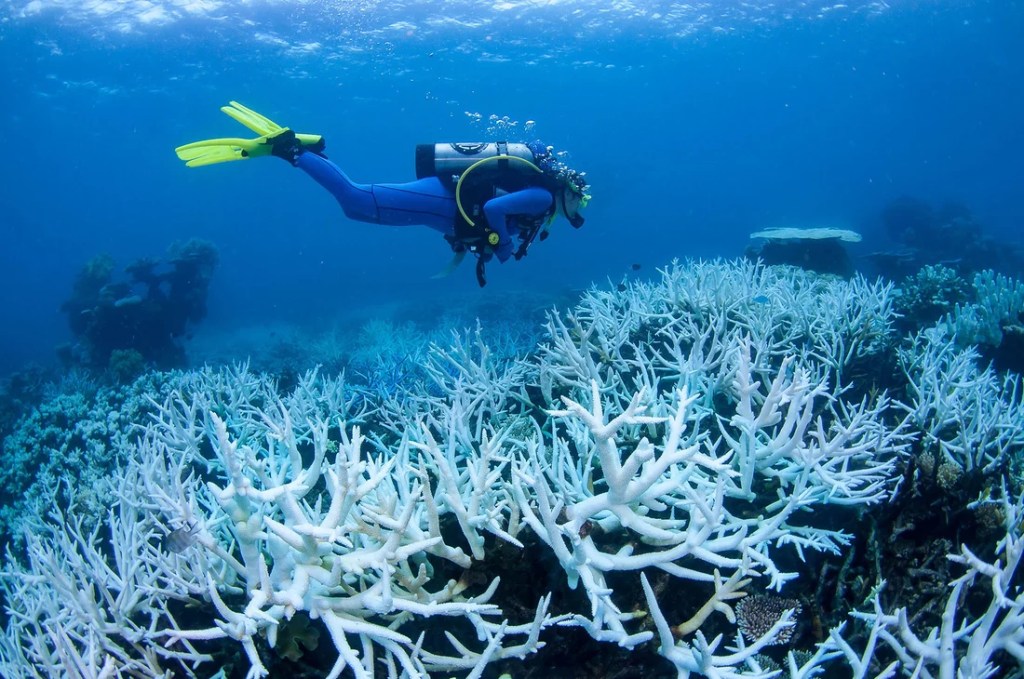
Introduction
When you think of coral, you might not realize that it’s a living organism. But it is, and it’s a vital part of the marine ecosystem. Coral is actually made up of tiny organisms called polyps. There are two main types of corals: hard corals and soft corals. Hard corals have a rigid skeleton made of calcium carbonate. These are the main reef building coral. Soft corals do not have that skeleton but are also colonial and typically look like fans or bushes. Reef-building corals contain photosynthetic cells called zooxanthellae. This alga lives in the tissue of the coral forming a mutualistic relationship because both organisms benefit from this symbiosis.
- Mutualistic relationship: an interaction between two or more species that benefits both.
- Symbiosis: interaction between two different organisms living in close physical proximity.
The corals provide a protective environment for the zooxanthellae as well as carbon dioxide and water which they use for photosynthesis. Through photosynthesis the zooxanthellae supply the coral with sugars and proteins to make fats, carbohydrates, calcium carbonate, etc. The zooxanthellae also provide corals their vibrant colors. This mutualistic relationship is a driving force behind the growth of coral reefs.
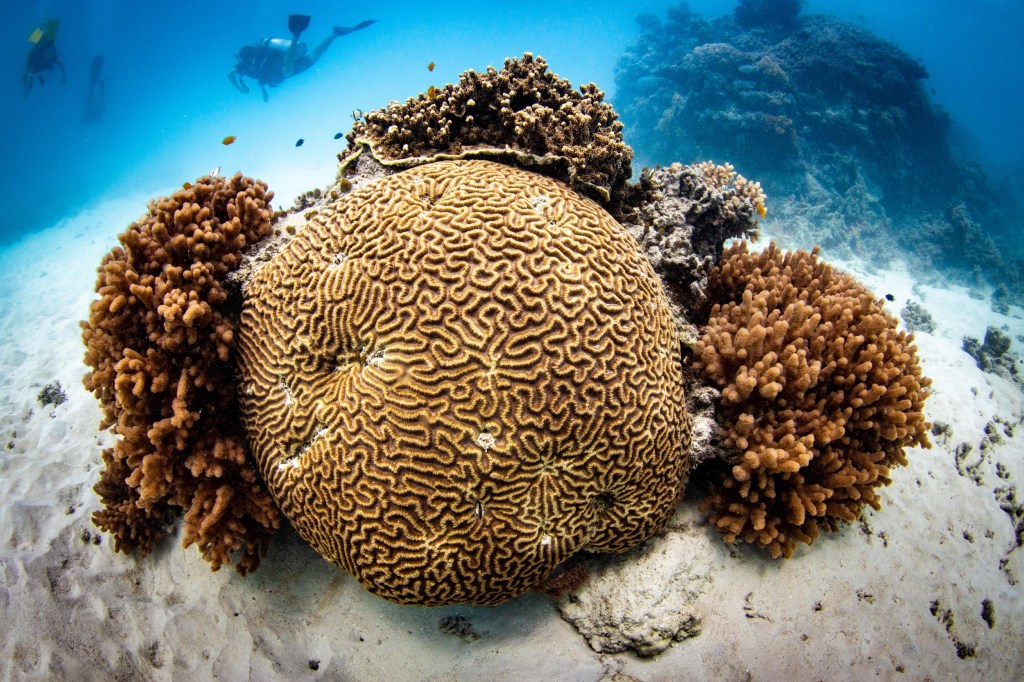
Hard Coral
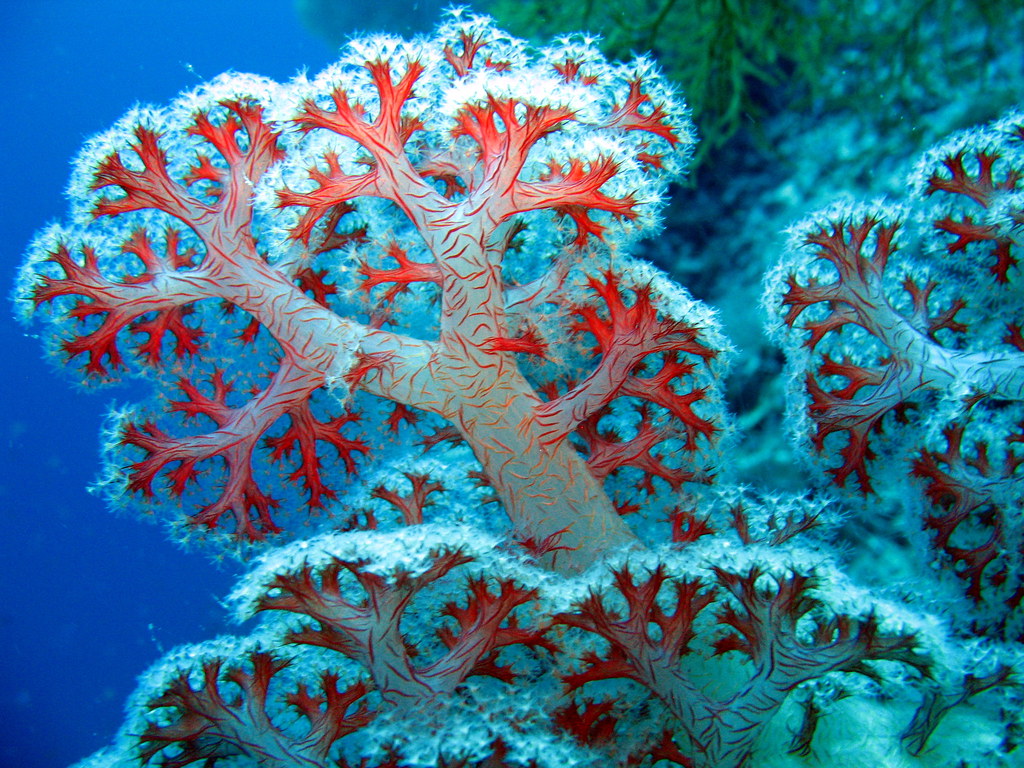
Soft Coral
What is Coral Bleaching?
Coral bleaching is a process in which these corals lose their vibrant colors, provided by the zooxanthellae. When the ocean environment changes, due to heat or pollution, corals become stressed and expel the algae. Expelling the algae not only gets rid of the color but also the vital nutrients that the algae was providing the corals, so this typically results in the coral dying.
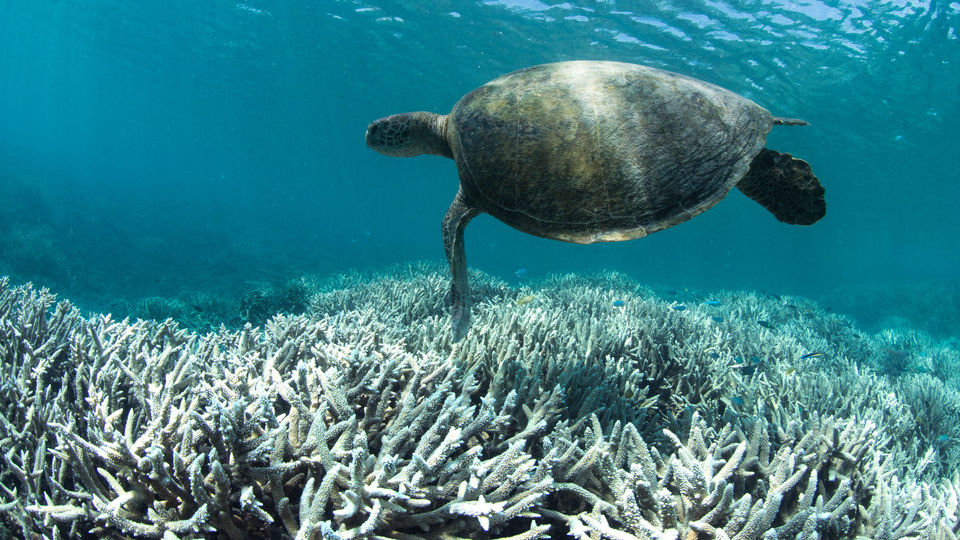
The Role of Climate Change
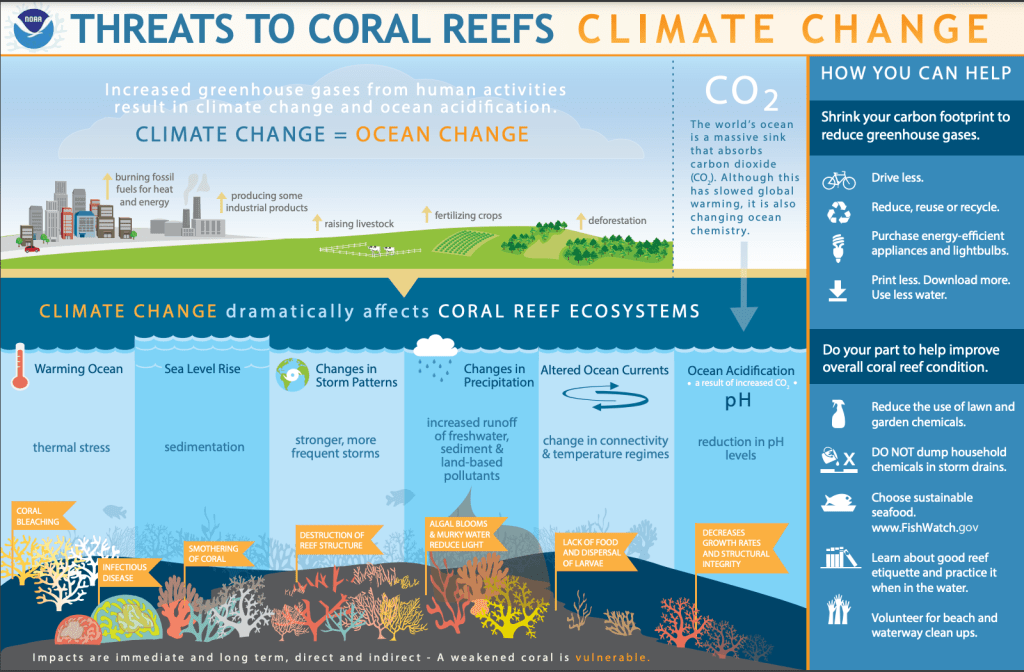
Mining and burning fossil fuels release carbon pollution into the atmosphere, leading to ocean warming. As the Earth warms, so do the oceans. Coral is highly sensitive to temperature changes, and even a 1-degree Celsius increase can cause significant stress. In addition to warming oceans, increased CO2 levels also contribute to ocean acidification, which decreases growth rates and weakens coral skeletons. You can see some of the other threats to coral reefs in the infographic below.
Why are Coral Reefs Important?
There are many reasons why coral reefs are vital, not only the ocean’s ecosystem but also human life. Coral reefs contain up to 4,000 species of fish, coral, turtles, jellyfish, etc. Around 25% of marine life relies on the reefs for shelter, spawning grounds, and protection from predators. Coral reefs also:
- Provide food for coastal communities in which the NOAA estimates to be worth around $100 million.
- Aid in finding new medicines because many compounds in animals and plants that live in coral reefs have the potential to cure cancer, arthritis, bacterial infections, etc.
- Protect shorelines by reducing the impact from waves and storms. This also prevents damage to property and loss of life.
Coral reefs are not just essential for marine life. They also support millions of jobs in tourism, fisheries, and coastal protection. The loss of coral reefs could cost the global economy billions of dollars annually.
Why Does This Matter?
Once coral dies, it rarely comes back because the few surviving coral struggle to reproduce, and the ecosystem eventually deteriorates. Between 2014 and 2017 30% of the world’s tropical coral reefs died from severe heat-stress and just this year we had another global bleaching event. This year’s bleaching event was the most severe and widespread mass bleaching event on record. As the Earth is getting warmer and warmer, these events are getting more and more frequent. This is just another reason why addressing climate change is so important.
What Can We Do?
While coral bleaching may seem like a global issue beyond your control, there are steps you can take to make a difference. Reducing your carbon footprint, supporting sustainable seafood practices, and using reef-safe sunscreen are just a few ways you can help protect these vital ecosystems.
If you want to learn more about coral reefs and how you can help protect them go to: https://www.marineconservation.org.au/fight-for-our-reef/
If you have any questions about coral reefs or coral bleaching comment below. Remember to like this post and subscribe if you want to be notified when a new post is published. Thanks for reading!
References
National Oceanic and Atmospheric Administration. (n.d.). What are corals? NOAA’s National Ocean Service. https://oceanservice.noaa.gov/education/tutorial_corals/coral01_intro.html
National Oceanic and Atmospheric Administration. (n.d.). Zooxanthellae: Coral’s symbiotic algae. NOAA’s National Ocean Service. https://oceanservice.noaa.gov/education/tutorial_corals/coral02_zooxanthellae.html
National Oceanic and Atmospheric Administration. (n.d.). Why are coral reefs so important? NOAA’s National Ocean Service. https://oceanservice.noaa.gov/education/tutorial_corals/coral07_importance.html
World Wildlife Fund. (n.d.). Everything you need to know about coral bleaching and how we can stop it. World Wildlife Fund. https://www.worldwildlife.org/pages/everything-you-need-to-know-about-coral-bleaching-and-how-we-can-stop-it
National Oceanic and Atmospheric Administration. (2015, October 8). NOAA confirms 4th global coral bleaching event. NOAA. https://www.noaa.gov/news-release/noaa-confirms-4th-global-coral-bleaching-event
NASA. (2022, July 22). Vanishing corals, part two: Climate change is stressing corals, but there’s hope. NASA Climate Change. https://climate.nasa.gov/explore/ask-nasa-climate/3290/vanishing-corals-part-two-climate-change-is-stressing-corals-but-theres-hope/


 Emily's Biology Blog
Leave a comment