
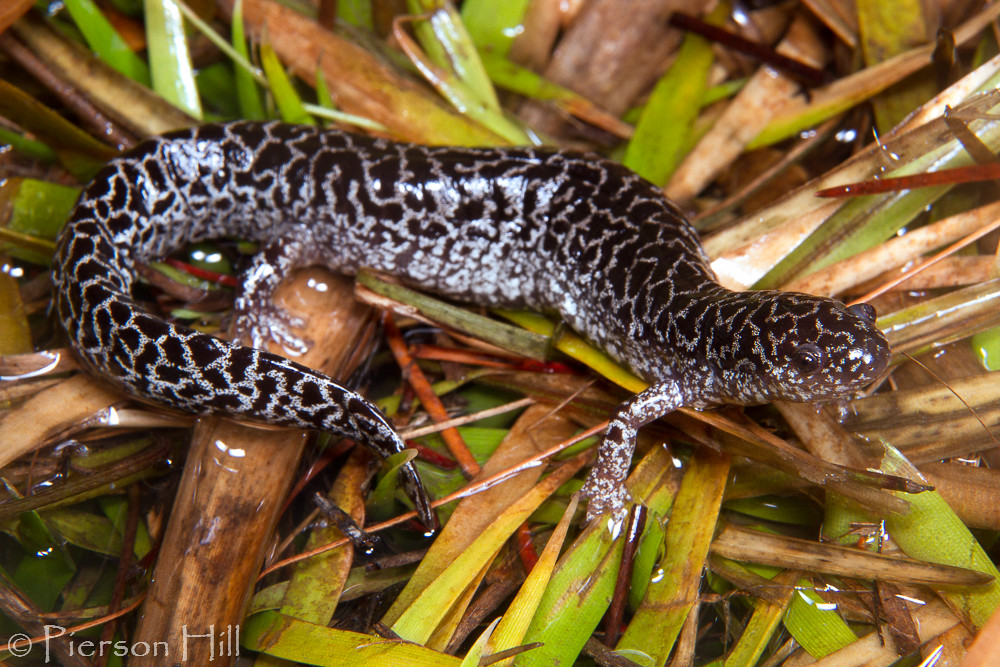
Ambrystoma cingulatum
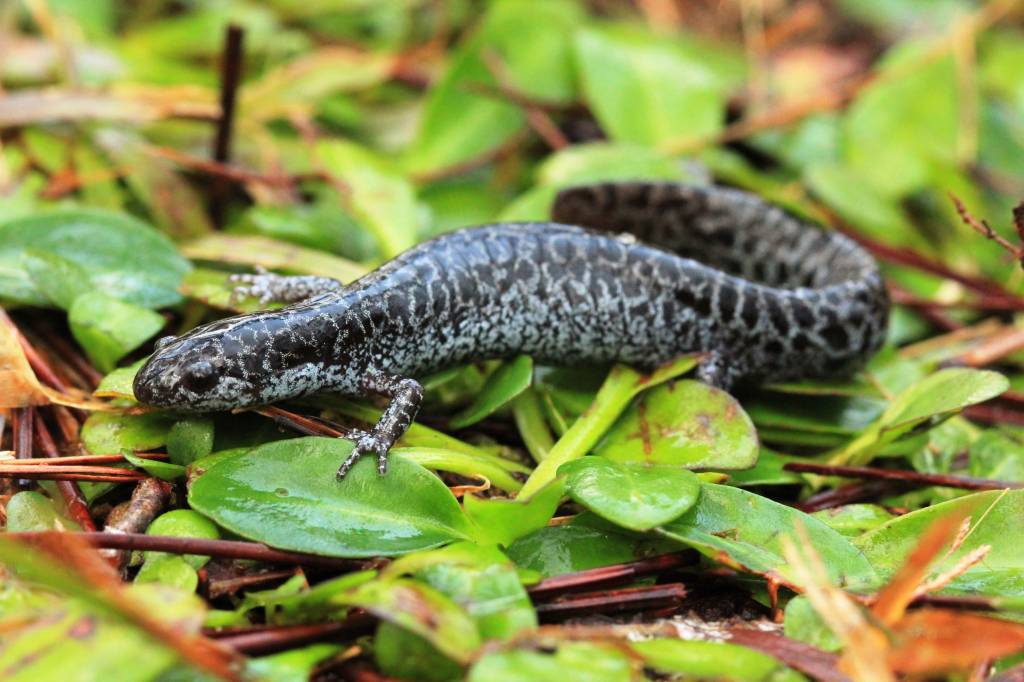
This salamander is medium-sized, reaching about 5 inches in adulthood. They have silver to black coloration with a mottled back. This species is native to the United States, specifically areas such as Florida, Georgia, and South Carolina. It doesn’t migrate and the total population size is unknown because of their secretive habits as adults. They were most recently assessed by the IUCN in 2021 and determined to be an endangered species because of significant population decline.
- Endangered: a plant or animal that is in danger of extinction.
Life Cycle
Egg -> Larval Stage -> Juvenile Stage -> Adult Salamander
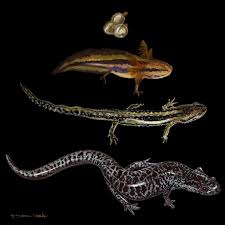
Fun fact: You’ve probably heard of the super cool and cute salamanders called Axolotls. This species is strange because it retains the juvenile features like their feathery gills, elongated tail, and aquatic lifestyle unlike most other salamander species that metamorphosize into adults and move onto land. This is called neoteny.
- Neoteny: a biological process where an organism retains juvenile features into adulthood.
Main Threats
Transportation and service corridors: roads and railroads
- Road mortalities were historically significant when subpopulations lived near busy roads.
- The current population is so low that road mortality is now a minor threat.
Biological resource use: fishing and harvesting aquatic resources
- Timber operations on managed lands are regulated, posing a minor threat.
Natural system modification: fire and fire suppression
- Disruption of the natural fire cycle is the primary threat. Historically, fires in the early summer kept breeding ponds open and grassy.
- Modern fire management typically uses late-winter prescribed burns, which doesn’t burn the breeding ponds, allowing shrubs and woody vegetation to invade and shade ponds.
- This change leads to unsuitable conditions for breeding.
Invasive species, genes and diseases
- The potential introduction of the salamander chytrid fungus is a serious threat.
- If introduced, it could severely impact native salamanders.
Climate change and severe weather: habitat shifting and alteration, droughts, and storms and flooding
- Multi-year droughts inhibit breeding, with droughts between 1998 and 2019 causing significant declines in salamander populations.
- Climate change increases drought frequency, which reduced breeding success and population resilience even more.
Past Responses
This species has seen a massive decline of roughly 40-60% over the last 10 years because of climate change. A previously known location for this species was South Carolina but it has not been recorded there since 2010, leading to the idea that they have been extirpated from this area. Because this species doesn’t migrate very far during its lifetime, the loss of subpopulations has caused severe isolation of these different populations. All of their currently occupied properties are losing active breeding wetlands. Because this species has relatively small populations with periods of explosive breeding events, if the conditions are poor during the breeding season, it will have a significant impact on the total population number.
In recent years, suitable breeding conditions have been disrupted by winter droughts and hurricanes that either dry up or wash out the ponds that are vital for breeding. This species is continuing to experience major declines, and it is predicted that even protected areas will still see this decline due to climate change.
- Extirpation: The complete removal or elimination of a species, plant, or animal from a specific geographic area.
Their Future
If global change continues at its current rate, Ambryostoma cingulatum is likely to face severe threats leading to extinction, primarily due to climate change impacts and land-use alterations.
This species’ limited dispersal ability and small population size make genetic isolation more likely with reduced suitable habitats and breeding sites. That isolation further intensifies the risk of extinction because they are less resilient to change. The increased frequency of severe weather events, prolonged droughts, and fire suppression will significantly reduce active breeding ponds, even in protected areas, reducing population stability. Coastal habitat transformations are also likely to reduce the suitable terrestrial and aquatic habitats available.
If these global change drivers continue, this species is likely to experience limited to a few isolated subpopulations. Without intervention, it will likely face decline and possible extinction.
Conservation measures such as habitat restoration, prescribed burns, and protections against habitat loss could potentially mitigate these pressures.
Thank you for reading! I hope this post sheds light on the challenges facing the frosted flatwoods salamander and why conservation efforts are so vital. Feel free to leave a comment with your thoughts, and don’t forget to like and share if you found this interesting!
Sources
International Union for Conservation of Nature (IUCN). (2022). Ambystoma cingulatum. The IUCN Red List of Threatened Species. Retrieved from https://www.iucnredlist.org/species/1099/118971595#population
U.S. Fish and Wildlife Service (USFWS). (n.d.). Flatwoods salamander (Ambystoma cingulatum). Retrieved from https://www.fws.gov/species/flatwoods-salamander-ambystoma-cingulatum
Center for Biological Diversity. (n.d.). Flatwoods salamander natural history. Retrieved from https://www.biologicaldiversity.org/species/amphibians/flatwoods_salamander/natural
_history.html#:~:text=Flatwoods%20salamanders%20lay%20their%20eggs,when%20r
ains%20inundate%20the%20wetlands.
Animal Diversity Web (ADW). (n.d.). Ambystoma cingulatum (Flatwoods salamander). University of Michigan. Retrieved from https://animaldiversity.org/accounts/Ambystoma_cingulatum/
Roznik, E. A., & Johnson, S. A. (2011). Range-wide habitat modeling of the endangered flatwoods salamander, Ambystoma cingulatum. Conservation Genetics, 12(5), 1323–1339. https://doi.org/10.1007/s10592-011-0274-1
 Emily's Biology Blog
Leave a comment