
Introduction
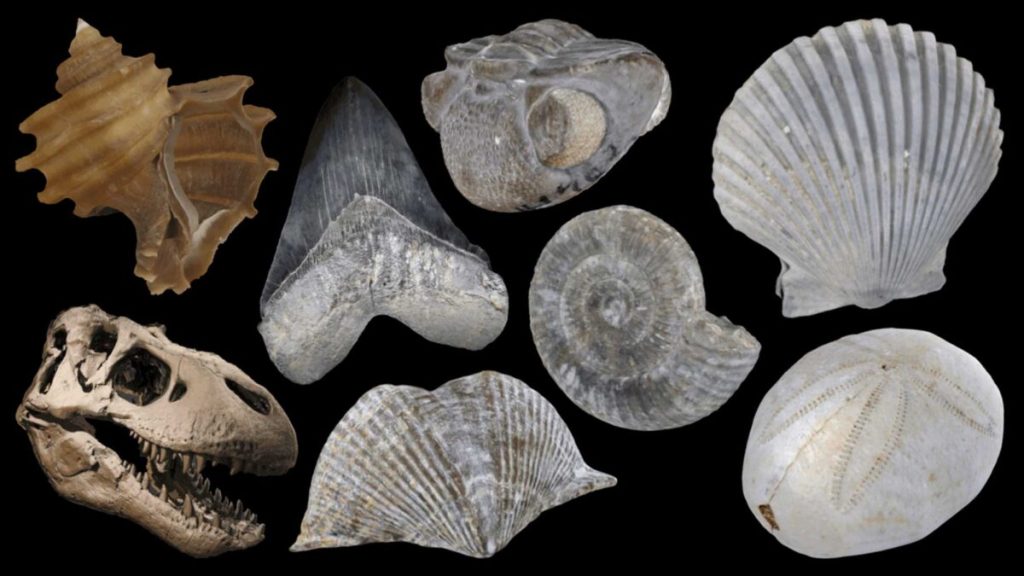
Unless you are in the biology or geology field, most people just think of dinosaur bones when they hear “fossil.” While dinosaur bones are fossils, there are many other things that are fossils and just as cool! A fossil is defined as a remnant or trace of life preserved in rock that is at least 10,000 years old. Fossils provide physical proof of life that existed millions of years ago. They show how species have changed over time, supporting the theory of evolution. Some fossils belong to species with no modern relatives, giving us a glimpse into ancient ecosystems. Fossils can even help us reconstruct past environments, revealing what ancient landscapes and climates were like.
Types of Fossils
Fossils come in different forms, depending on how they were preserved. Below are the two major categories:
- Body fossils– These include actual physical remains of organisms, such as bones, shells, and teeth.

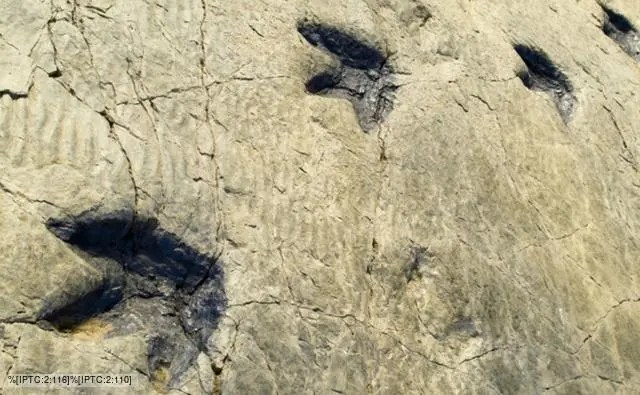
- Trace fossils– These provide evidence of an organism’s behavior, such as footprints, burrows, and nests.
How Fossils Form
Fossilization is rare, so only certain conditions allow remains to be preserved. The key to fossilization is rapid burial, which helps protect remains from taphonomic processes. Here are some of the most common fossilization processes:
- Permineralization– minerals fill spaces in bones or wood, hardening them over time. An example is petrified wood.
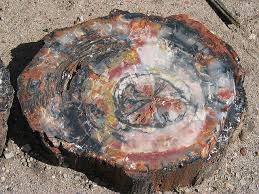
- Carbonization– organic material breaks down, leaving a carbon imprint. This is common with plants and soft-bodied organisms.

- Recrystallization– Original minerals change structure over time but retain their shape, often occurring in shells composed of calcium carbonate.
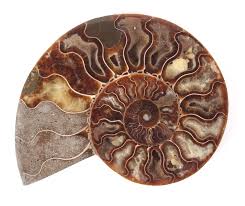
- Replacement– Original material dissolves at a molecular level and is replaced by minerals, creating a detailed, stone-like copy of the organism.
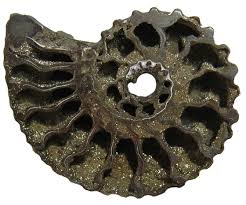
- Encasement– organisms get trapped in substances like amber, preserving soft tissue.

Special types of fossil preservation:
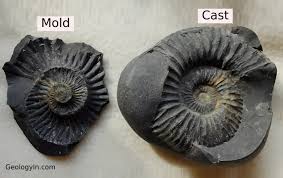
- Mold and cast fossils– when an organism leaves an impression in sediment (the mold) and later fills in with minerals (the cast), which preserves its shape.
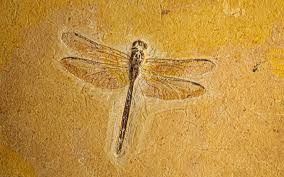
- Lagerstatten– Fossil deposits where preservation is exceptionally detailed, often including soft tissues and entire ecosystems.
The Fossil Record
The fossil record is the total collection of fossils. It is the only direct evidence of extinct life and helps reconstruct evolutionary history. It also helps calibrate the molecular clocks, which means dating evolutionary events. Additionally, it tracks mass extinctions and recoveries. However, the fossil record is far from complete.
Part of understanding the fossil record is recognizing faunal succession, which means that fossils appear in specific time layers in a predictable order, allowing for the relative dating of rocks based on their fossil content. Another important concept is biostratigraphy, which uses fossil assemblages to correlate relative ages to rock strata, helping with the understanding of Earth’s geological history.
The Limits of the Fossil Record
Despite what you may think, fossilization is actually quite rare, and most organisms never get preserved. The probability of any one organism becoming a fossil is estimated to be less than one-tenth of 1%, and even fewer have actually been found. This is called intrinsic incompleteness, meaning the fossil record is inherently incomplete due to the rarity of fossilization, as well as the bias towards hard-bodied organisms.
Another type of incompleteness is extrinsic incompleteness, which refers to geological factors affecting fossil availability, such as erosion, sedimentation issues, and the lack of suitable preservation conditions. Additionally, sampling bias must be considered because many fossils exist but haven’t been found due to accessibility, geography, and researcher focus.
Fossils as Evidence for Evolution
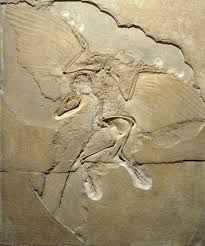
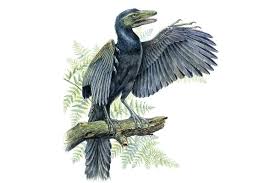
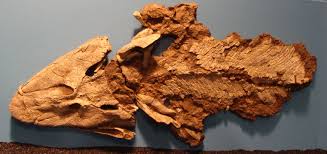
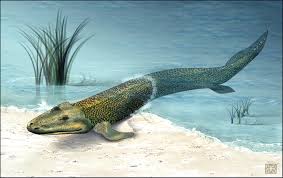
Even with its limitations, the fossil record offers some of the strongest evidence for evolution, showing how species have changed over time. Some fossils, known as transitional fossils, have characteristics of both an ancestral species and its descendant species. These fossils are important because they help scientists trace evolutionary changes and fill gaps in the fossil record. Here are two famous examples:
- Archaeopteryx– a feathered dinosaur that shows the evolution of modern birds.
- Tiktaalik– an ancient species with four reinforced limbs that shows the transition from fish to land animals.
Fossils and Mass Extinctions
In addition to showing gradual evolutionary changes, fossils also document dramatic events in Earth’s history, mass extinctions. A mass extinction is a period in Earth’s history when a large number of plant and animal species become extinct within a relatively short time.
- Permian-Triassic extinction– wiped out around 90% of species.
- K-T extinction (Cretaceous-Paleogene extinction)– Named for the boundary between the Cretaceous and Paleogene periods, this event wiped out all non-avian dinosaurs and paved the way for the rise of mammals, which diversified and became the dominant land animals.
Conclusion
Fossils are more than just ancient bones, they are windows into Earth’s past. They provide crucial evidence of evolution, reveal lost ecosystems, and help us understand mass extinctions and climate shifts over millions of years. Although the fossil record is incomplete, it remains one of our most valuable tools for reconstructing the history of life. As paleontology advances, new discoveries continue to reshape our understanding of ancient worlds.
Thank you so much for reading! I know it’s been a while since my last post. Between school, internship applications, and work, I’ve been super busy. But I’m excited to be back and to be starting with such a fun topic! If you have any questions about fossils, leave a comment below!
Sources
- Lumen Learning. (n.d.). Fossils. SUNY Earth Science. Retrieved from link
- Fossil Museum. (n.d.). Fossilization. Retrieved from link
- Bartlett, R. (2018, February 15). How does fossilisation happen? BBC Future. Retrieved from link
- American Museum of Natural History. (n.d.). Mass extinction. Retrieved from link
- Natural History Museum. (n.d.). What is mass extinction and are we facing a sixth one? Retrieved from link
- Encyclopædia Britannica. (n.d.). Tiktaalik roseae. Retrieved from link
- Encyclopædia Britannica. (n.d.). Archaeopteryx. Retrieved from link
 Emily's Biology Blog
Leave a comment