
Women have always been part of science, but they’ve rarely gotten the recognition they deserve. A lot of them were working behind the scenes, pushed into the background, or had to fight just to be taken seriously. Still, they made huge discoveries, started entirely new fields, and helped build the foundation of modern science.
In this post, I want to highlight just a few of the many women whose work has shaped science. From entomology, astronomy, chemistry, computer science, medicine, and ecology, their stories are important, and they deserve to be known.
Maria Sibylla Merian

- Merian lived from 1647 to 1717
- She was a German entomologist and naturalist who made major contributions to the study of insects.
- Entomology: the scientific study of insects’ biology, behavior, ecology, and interactions with humans, the environment, and other organisms
- Naturalist: someone who studies the natural world, make observations of the relationships between organisms and their environments and how those relationships change over time
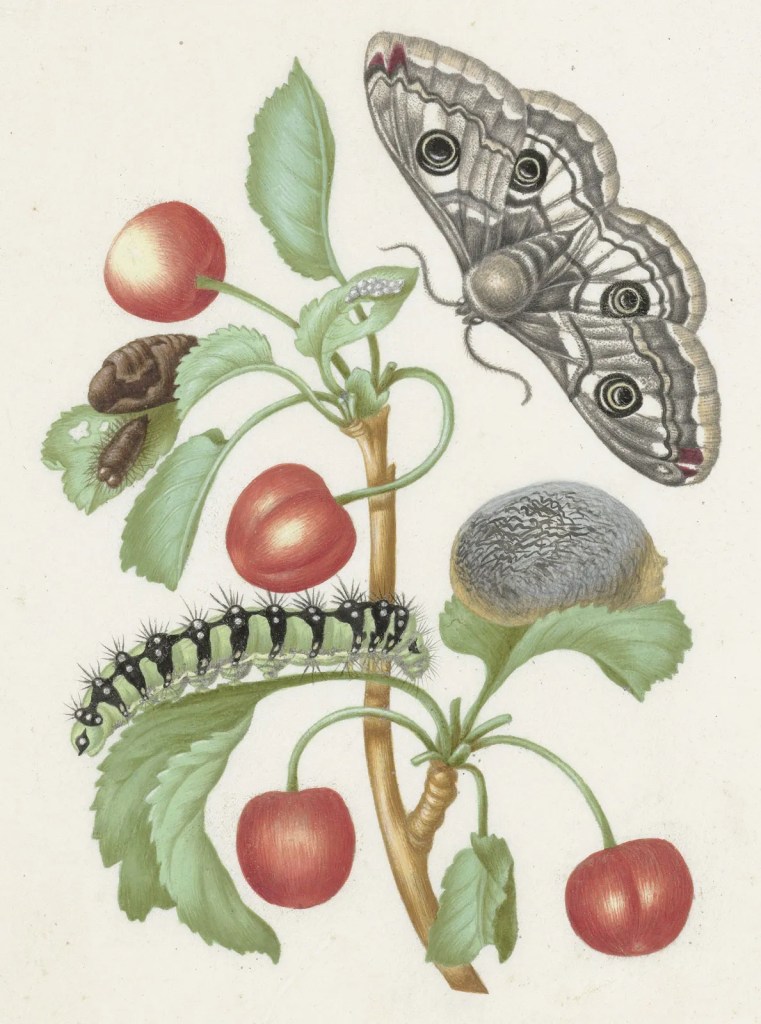
- She was best known for her incredibly detailed and beautiful illustrations of insects and plants (one is shown below)
- Merian focused primarily on insect development and metamorphosis, at a time when this type of life cycle was relatively misunderstood.
- Her observations and artwork helped lay the foundation for modern entomology.
Caroline Herschel

- Herschel lived from 1750 to 1848
- She was a German astronomer, widely recognized as the first professional female astronomer.
- In 1783, she discovered three nebulae using a telescope, an impressive feat during a time when women were rarely involved in scientific research.
- Just a few years later, in 1786, she became the first woman to discover a comet.
- Over the next 11 years, she went on to discover seven more comets, making her one of the most prolific comet-hunters of her time.
Marie-Anne Paulze-Lavoisier
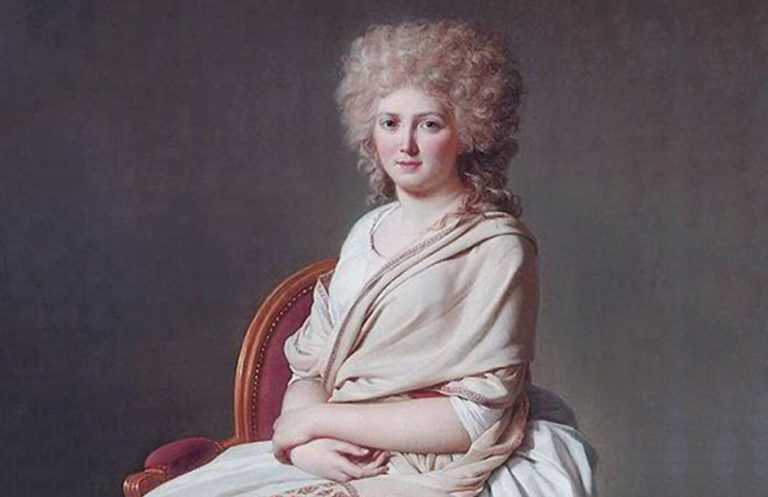
- Paulze-Lavoisier lived from 1758 to 1836
- She was a French chemist who played a crucial role in the development of modern chemistry.
- She worked closely with her husband, Antoine Lavoisier, assisting with experiments and translating important scientific texts from English to French.
- Paulze-Lavoisier also documented their work by making detailed entries in lab notebooks and sketching diagrams of experimental setups.
- Together, they helped lay the groundwork for modern chemical theory and essentially rebuilt the field of chemistry from the ground up.
Sophie Germain
- Germain lived from 1776 to 1831
- She was a French mathematician and physicist who made contributions to number theory, acoustics, and the theory of elasticity.
- She studied in secret under the male pseudonym M. Le Blanc to gain access to lecture notes and academic correspondence, eventually working with renowned mathematician Carl Friedrich Gauss.
- Because of her gender, she was largely isolated from the academic community and denied access to many scientific resources, which limited the progress she could make, especially in elasticity theory.
- Despite this, she developed a strategy toward solving Fermat’s Last Theorem and even shared her ideas with Gauss, though she never formally published her work.
- Fermat’s Last Theorem remained unsolved until 1995, when it was finally proven by English mathematician Andrew Wiles.
- The year she passed away Gauss had arranged for her to receive an honorary doctorate from the University of Göttingen, but she died of breast cancer before she could receive it.
Mary Anning

- Anning lived from 1799 to 1847
- She was a fossil hunter and self-taught anatomist who played a key role in the early development of paleontology.
- She discovered several major Mesozoic reptile fossils, including the first known Ichthyosaurus and the first complete Plesiosaurus skeleton.
- Her fossil finds helped shape scientists’ understanding of Earth’s geologic history and may have even influenced Darwin’s theory of evolution.
- Despite having little formal education, she taught herself geology, anatomy, paleontology, and scientific illustration, which made her a respected figure among many male paleontologists of the time.
- She provided British scientists with specimens to study, but was rarely given proper credit, many of the fossils she excavated were published in prestigious journals without any mention of her name.
Ada Lovelace
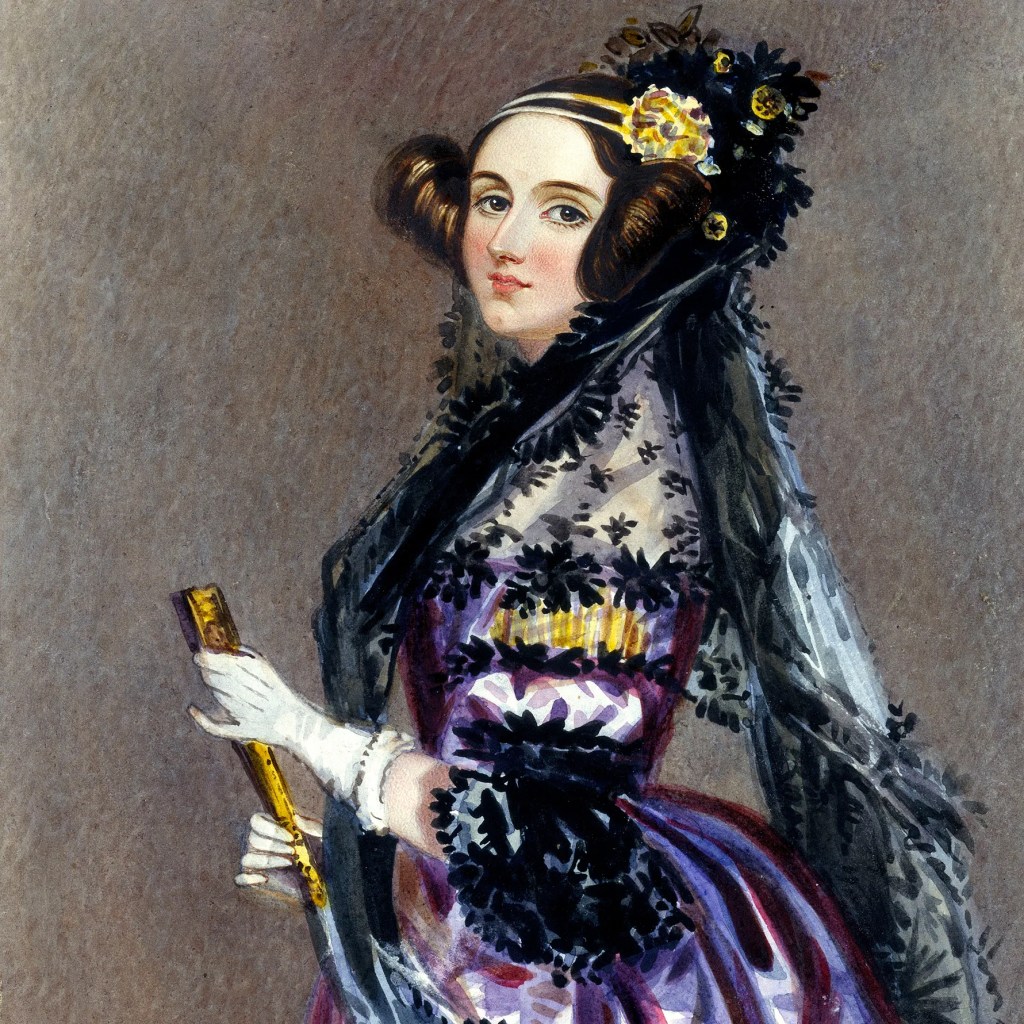
- Lovelace lived from 1815 to 1852
- She was a British mathematician best known for writing what’s considered the first computer program.
- She worked with Charles Babbage on his design for the Analytical Engine, an early mechanical general-purpose computer.
- She was privately educated, later teaching herself advanced mathematics with guidance from mathematician Augustus De Morgan.
- Lovelace is especially known for her translation and extensive annotations of an article by Italian mathematician Luigi Federico Menabrea, where she described how the machine could be programmed to compute Bernoulli numbers.
- Her insights were more than simple calculation, imagining a future where machines could manipulate symbols and even compose music, long before digital computers existed.
- The early programming language Ada was named in her honor.
- Today, Ada Lovelace Day is celebrated on the second Tuesday of October to recognize her legacy and the contributions of women in STEM.
Florence Nightingale
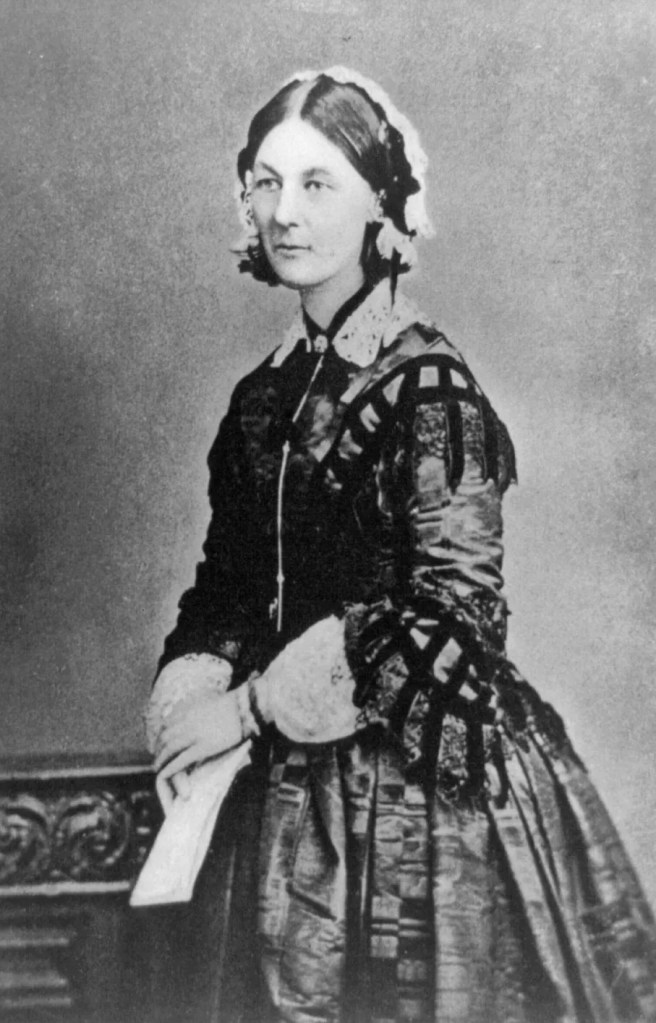
- Nightingale lived from 1820 to 1910
- She was a nurse, statistician, and social reformer, often considered the founder of modern nursing.
- She established the first scientifically based nursing school: The Nightingale School of Nursing at St. Thomas’ Hospital in London.
- Nightingale also played a key role in creating formal training programs for midwives and nurses working in workhouse infirmaries.
- She was deeply committed to public health and used statistics, especially data visualization, to advocate for better sanitary conditions in hospitals.
- In 1907, she became the first woman to receive the prestigious Order of Merit.
- Her birthday, May 12, is now celebrated globally as International Nurses Day in honor of her contributions to healthcare.
Elizabeth Blackwell
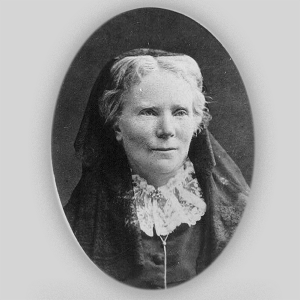
- Dr. Blackwell lived from 1821 to 1910
- She was an Anglo-American physician and the first woman in the United States to earn a medical degree, widely regarded as the first female doctor of medicine in modern history
- After being rejected by every major medical school she applied to, she was admitted to Geneva Medical College by what was essentially a fluke, and faced harassment and ostracism throughout her studies.
- Despite that, she graduated first in her class, breaking barriers for generations of women in medicine.
- She went on to open her own medical college for women, paving the way for more equitable access to medical education.
- She later published a book titled The Laws of Life, with Special Reference to the Physical Education of Girls, advocating for the health and education of women.
Alice Ball
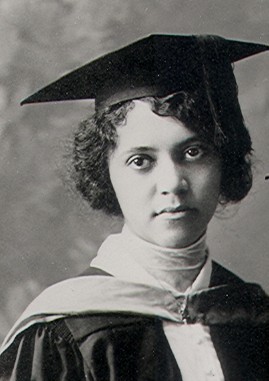
- Alice Ball lived from 1892 to 1916
- She was an African American chemist who developed the most effective treatment for leprosy in the early 20th century, an injectable extract from the Chaulmoogra tree.
- She earned a bachelor’s degree in pharmaceutical chemistry from the University of Washington, followed by a second degree in pharmacy just two years later.
- In 1915, she became both the first woman and the first African American to earn a master’s degree from the University of Hawaii.
- At just 23, she devised a method to chemically modify Chaulmoogra oil so it could be injected and properly absorbed by the body.
- Tragically, she died before she could publish her work. Her method was taken and published by Arthur L. Dean, who failed to credit her and renamed it the “Dean Method.”
- Today, her contributions are finally being recognized, and her technique is rightfully known as the Ball Method.
Janaki Ammal
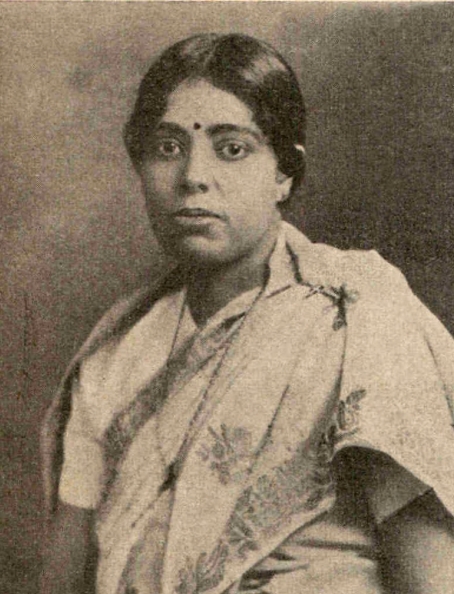
- Dr. Ammal lived from 1897 to 1984
- She was an Indian Botanist known for her pioneering work in cytogenetics (the study of chromosomes) and phytogeography (the study of plant distributions).
- She conducted research on plant breeding and created several intergeneric hybrids, contributing to the improvement of crop species.
- She earned her bachelor’s degree from Queen Mary’s College and an honors degree in botany from Presidency College.
- While earning master’s, she also taught at the Women’s Christian College.
- She later became the first Oriental Barbour Fellow and traveled to the University of Michigan, where she earned her D.Sc.
- Dr. Ammal is considered the first woman to receive a Ph.D. in botany in the United States and is still one of the few Asian women to be awarded a D.Sc. by the University of Michigan.
Ruby Hirose

- Ruby Hirose lived from 1904 to 1960
- She was a Japanese American biochemist and bacteriologist who made significant contributions to vaccine development and public health.
- She conducted research on serums and antitoxins at the William S. Merrell Laboratories, with much of her work focused on immunology.
- Her research played a key role in the development of vaccines for infantile paralysis (polio).
- In 1940, she was recognized by the American Chemical Society as one of ten outstanding women in chemistry for her scientific achievements.
Rosalind Franklin
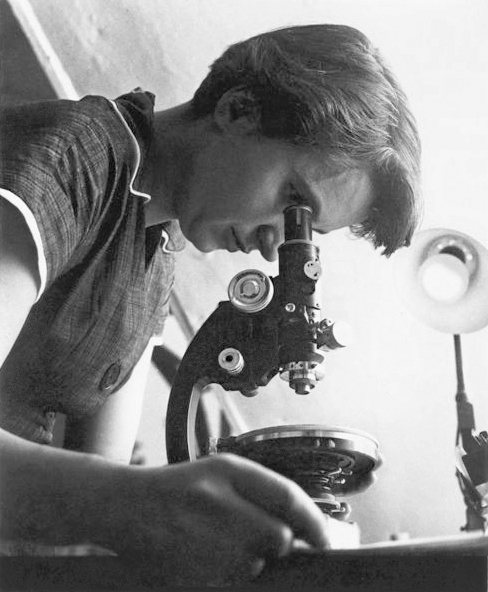
- Dr. Franklin lived from 1920 to 1958
- She was a British chemist whose work was central to the discovery of the molecular structure of DNA.
- She first studied physical chemistry at the University of Cambridge
- She studied physical chemistry at the University of Cambridge and initially received a fellowship to continue research there, but World War II forced her to take a position with the British Coal Utilisation Research Association.
- Fortunately, she was able to use that research for her doctoral thesis, and she earned her Ph.D. from Cambridge.
- She later worked at the state chemical laboratory in Paris, where she learned X-ray diffraction techniques.
- At King’s College London, she applied those techniques to biological molecules and was the first to discover that DNA was helical in structure and to calculate its density.
- Her X-ray image, famously known as Photo 51, was critical to Watson and Crick’s model of the double-helix structure of DNA.
- She also contributed to virology research, showing that the RNA of the tobacco mosaic virus formed a single-stranded helix embedded in its protein coat.
Jane Goodall

- Dr. Goodall was born in 1934 and is currently 91 years old
- She is a British ethologist best known for her groundbreaking, long-term research on wild chimpanzees at Gombe Stream National Park in Tanzania.
- Ethologist: a scientist who studies animal behavior in a natural setting
- At 18, she left school and worked as a secretary and film production assistant before saving enough to travel to Africa.
- In Africa, she began working as an assistant to renowned paleoanthropologist Louis Leakey, who later supported her research in Gombe.
- In 1965, she earned a Ph.D. in ethology from the University of Cambridge, one of the few to do so without first obtaining a bachelor’s degree.
- Her second husband, who was a member of Tanzania’s parliament and director of their national park system, helped her establish the reserve as a national park
- In 1977, she co-founded the Jane Goodall Institute for Wildlife Research, Education and Conservation, originally based in California.
- Her research revealed that chimpanzees are omnivorous, can make and use tools, and exhibit complex, previously unrecognized social behaviors.
- She has received numerous honors, including:
- UN Messenger of Peace (2002)
- Dame Commander of the Order of the British Empire (2003)
- Templeton Prize (2021)
- Stephen Hawking Medal for Science Communication (2022)
- Presidential Medal of Freedom (2024)
These women made incredible contributions to science, often without getting the recognition they deserved during their lifetimes. Whether they were studying stars, fossils, diseases, or DNA, they pushed forward in times when women were often shut out of academic and scientific spaces.
Their stories show how much determination and curiosity can achieve, even when the odds are stacked against you. And while the world of science still isn’t perfect when it comes to equality, their work helped open the doors for future generations. We owe a lot to them, and we still have a lot to learn from them.
Thanks for reading! Let me know in the comments who your favorite woman in STEM is, or if there’s someone you think I missed!
Subscribe to never miss a post!
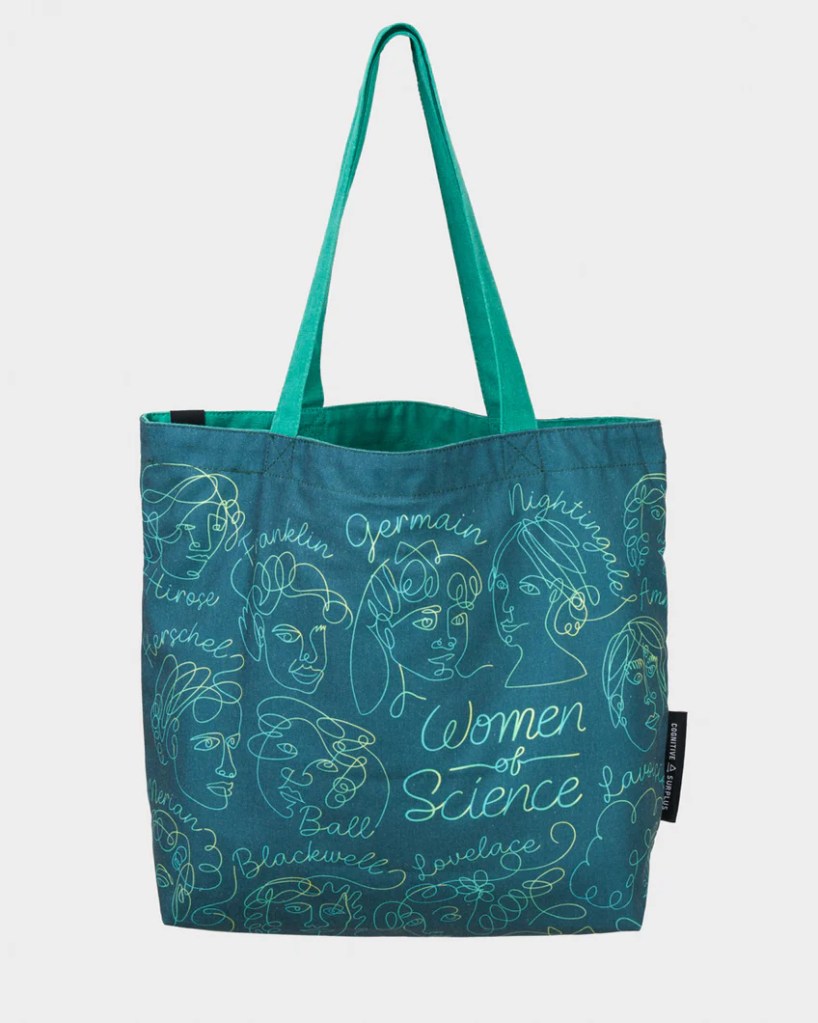
Here’s a link to a super cute Women of Science canvas shoulder tote bag: link!
Sources
Florence Nightingale. Encyclopaedia Britannica. Link
Elizabeth Blackwell. National Women’s History Museum. Link
Elizabeth Blackwell. Encyclopaedia Britannica. Link
Ruby Hirose. Smithsonian Institution Women’s History. Link
Maria Sibylla Merian. Encyclopaedia Britannica. Link
Marie-Anne Paulze-Lavoisier. Scientific Women. Link
Ada Lovelace. Encyclopaedia Britannica. Link
Caroline Lucretia Herschel. Encyclopaedia Britannica. Link
Janaki Ammal. Scientific Women. Link
Rosalind Franklin. Encyclopaedia Britannica. Link
Sophie Germain. Encyclopaedia Britannica. Link
Alice Ball. Scientific Women. Link
Jane Goodall. Encyclopaedia Britannica. Link
Mary Anning. Encyclopaedia Britannica. Link
Technology Networks. “Women in Science: Motivation, Challenges, and Advice.” Link
 Emily's Biology Blog
Leave a comment