
Introduction
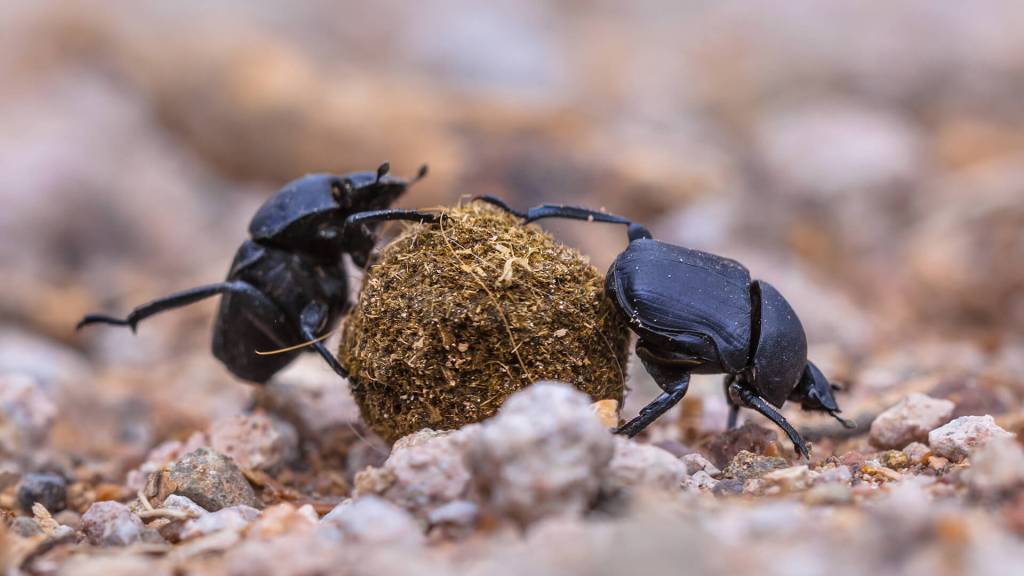
Dung beetles belong to the order Coleoptera (beetles), the family Scarabaeidae, and the subfamily Scarabaeinae, which includes the true dung beetles. These organisms are found on every continent except Antarctica and are named for their use of dung, primarily from herbivores, for both reproduction and food. They have specialized antennae that can detect dung from the air, strong front legs for digging and fighting, and spurs on their back legs for rolling dung. Depending on the species, they can live up to three years, and their size ranges from 0.5 to 2.5 inches. Their life cycle, from egg to adult, can take anywhere from one month to three years, and their larvae are called grubs.
Lifestyles
Dung beetles are typically grouped based on how they use dung: rollers (Telecoprids), tunnelers (Paracoprids), and dwellers (Endocoprids).
- Rollers form dung into balls and roll them away to bury underground. Males often court females with a dung ball as a nuptial gift and a bigger ball signals better resources and mate quality. If the female accepts, they’ll use the dung ball to either lay eggs in or as food for themselves.
- Tunnelers dig beneath dung pats and bury the dung underground. This behavior helps keep the dung fresh and protects the developing grubs from predators and parasites. Males typically transport the dung, while females organize it within the tunnel. Interestingly, one or both parents may stay with the grubs until they mature, a behavior that’s rare among insects.
- Dwellers stay on top of the dung to lay their eggs. Their larvae develop entirely within the dung pat, and adults are often found in fresh, moist dung, while the larvae grow in dung that’s drying out.
Ecological Importance
Dung beetles play a crucial role in agriculture and ecosystem health. In fact, they were intentionally introduced to the United States and Australia to help manage livestock waste. By burying dung, they improve soil aeration, increase water retention, and enhance nutrient recycling. Their activity reduces breeding sites for pests like flies and parasitic worms, contributing to natural pest control. They also boost pasture quality, which supports better milk production and weight gain in cattle. In addition, their tunneling helps reduce erosion and surface runoff, lowering nitrogen pollution and helping to prevent dead zones in nearby aquatic ecosystems.
Common Dung Beetle Species in the Eastern U.S.
Onthophagus taurus – Bull-Headed Dung Beetle
Native to Europe and Asia, O. taurus is a tunneler species introduced to the U.S. and Australia in the 1960s to help manage livestock dung. These beetles are small (8–10 mm long), shiny black, and oval-shaped. What makes them especially interesting is the polyphenism in males.
- Major males develop large, curved horns and engage in aggressive fights to guard tunnel entrances.
- Minor males are hornless and use sneaky mating strategies to bypass dominant males and access females.
- Horn development depends on larval nutrition, meaning more food leads to bigger horns.
- Females also compete for dung and may practice brood parasitism, laying their eggs in the brood balls of other females.
- Both parents provide resources, such as food, care, and shelter for the offspring.

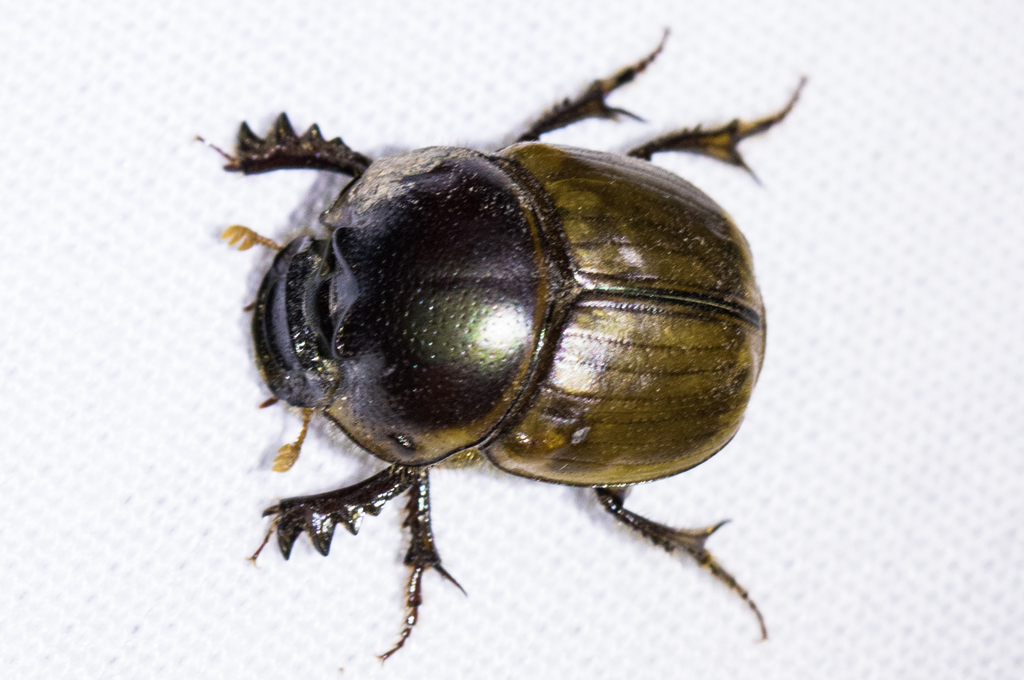
Digitonthophagus gazella – Gazelle Scarab
Originally from Sub-Saharan Africa and the southern Mediterranean, D. gazella has been introduced to tropical and subtropical regions worldwide, including the southern U.S., to improve pasture health.
- Tunnelers, reaching about 10–13 mm in length.
- Recognizable by their two-toned brown coloring: a darker pronotum (thorax) and lighter brown elytra (wing covers).
- Males have two short horns and long, curved front legs.
- Effective at reducing fly populations and increasing grazing space for cattle.
- However, in some regions, they’ve outcompeted native dung beetles, raising concerns about biodiversity impacts.
Phanaeus vindex – Rainbow Scarab
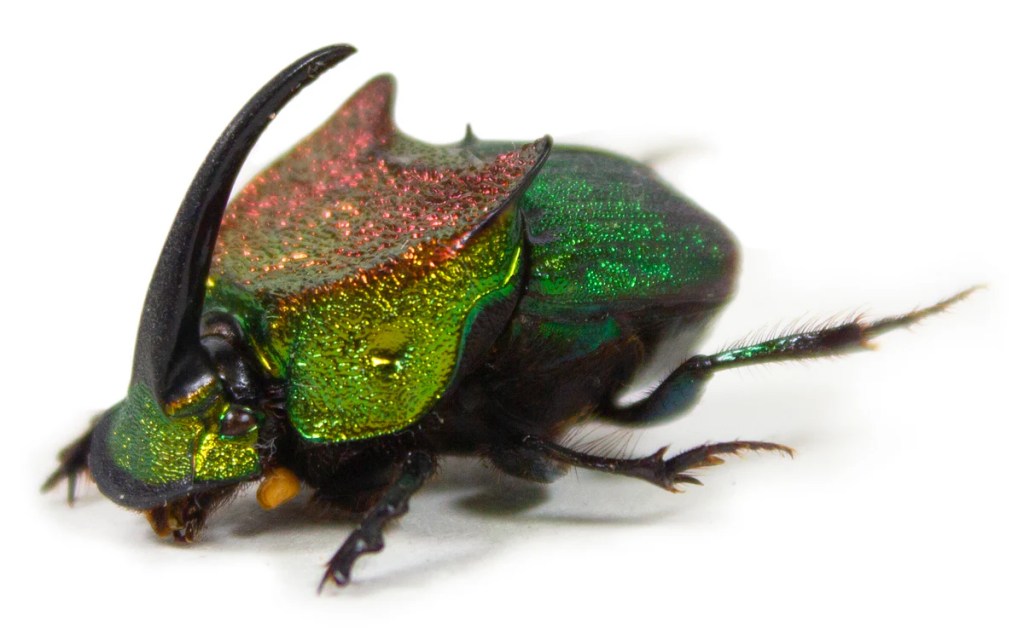
Native to North America, this flashy beetle has brilliant metallic colors in shades of green, copper, and gold.
- Medium-sized (11–22 mm long), with sexually dimorphic features: males have a prominent horn that curves backward, while females are hornless.
- Tunnelers that dig beneath dung pats to form brood chambers.
- Both sexes help in brood care, and larvae develop entirely within the dung ball.
- Adults are typically short-lived (less than a year), but their ecological contributions are significant.
- They are known for reducing fly populations and promoting soil health through aeration and nutrient cycling.
Dichotomius carolinus – Carolina Copris
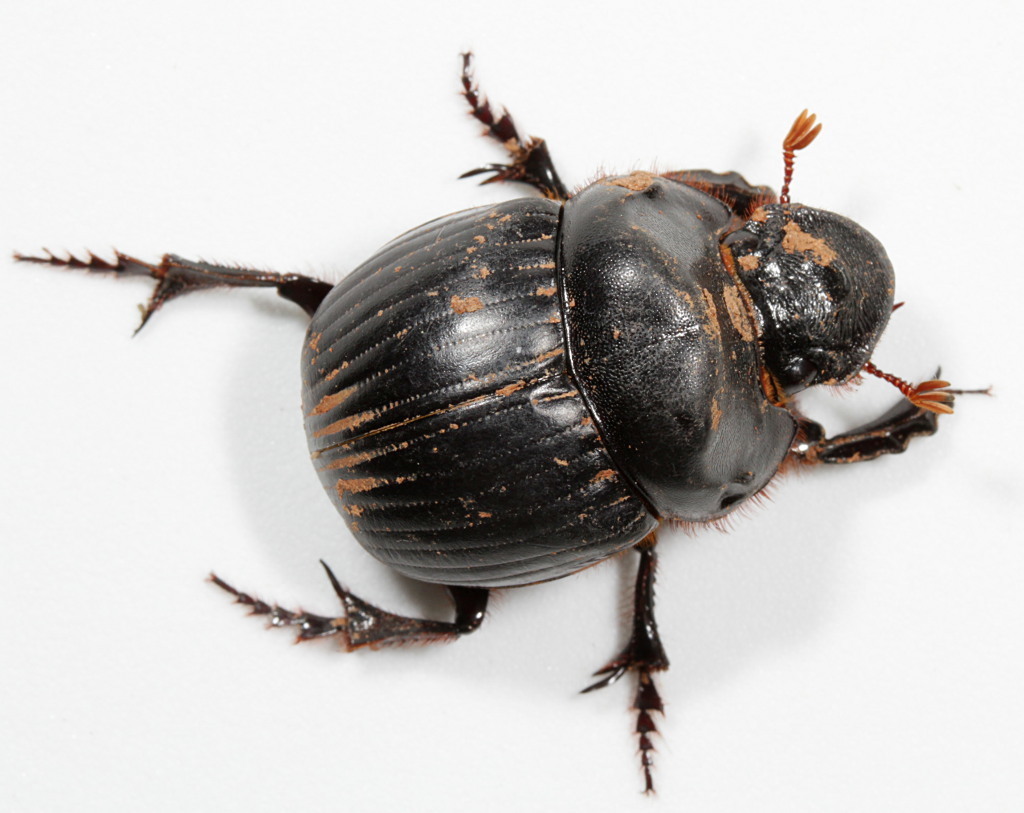
This species is one of the largest dung beetles in the eastern U.S., measuring 22–30 mm long.
- Glossy black with prominent ridges on their wing covers (elytra).
- Nocturnal and often attracted to lights.
- Males have a short, blunt horns on the head; females lack horns.
- Tunnelers that dig deep brood chambers, often leaving a mound of soil at the entrance.
- Both parents participate in digging and provisioning, with tunnels containing multiple brood balls.
- Found in pastures and grasslands, especially in areas with livestock.
- Active from spring to fall, with year-round activity in warmer states like Florida.
Conclusion
Dung beetles may not have the most glamorous job, but their work is essential to the health of our ecosystems. They provide critical services like soil improvement, pest control, and nutrient recycling. The four species highlighted here, Onthophagus taurus, Digitonthophagus gazella, Phanaeus vindex, and Dichotomius carolinus, represent just a small part of the incredible diversity of this group.
Thank you so much for reading! If you have any questions about dung beetles, leave a comment below!
Subscribe to be notified when new posts are published!
Sources
San Diego Zoo Wildlife Alliance. (n.d.). Dung Beetle. Retrieved from link
Cornell CALS. (n.d.). Visual Guide to Dung Beetles. Retrieved from link
Natural History Museum. (n.d.). How Dung Beetles Keep the World Clean. Retrieved from link
iNaturalist. (n.d.). Onthophagus taurus. Retrieved from link
Cornell CALS. (n.d.). Onthophagus taurus in NY Pastures. Retrieved from link
Wildlife ACT. (n.d.). Dung Beetle Behavior Types. Retrieved from link
Dung Beetle Innovations NZ. (n.d.). Gazella Fact Sheet. Retrieved from link
IDTools. (n.d.). Digitonthophagus gazella. Retrieved from link
BugGuide. (n.d.). Digitonthophagus gazella. Retrieved from link
iNaturalist. (n.d.). Phanaeus vindex. Retrieved from link
IDTools. (n.d.). Dichotomius carolinus. Retrieved from link
Invasive.org. (n.d.). Dichotomius carolinus Image. Retrieved from link
iNaturalist. (n.d.). Dichotomius carolinus. Retrieved from link
 Emily's Biology Blog
Leave a comment