
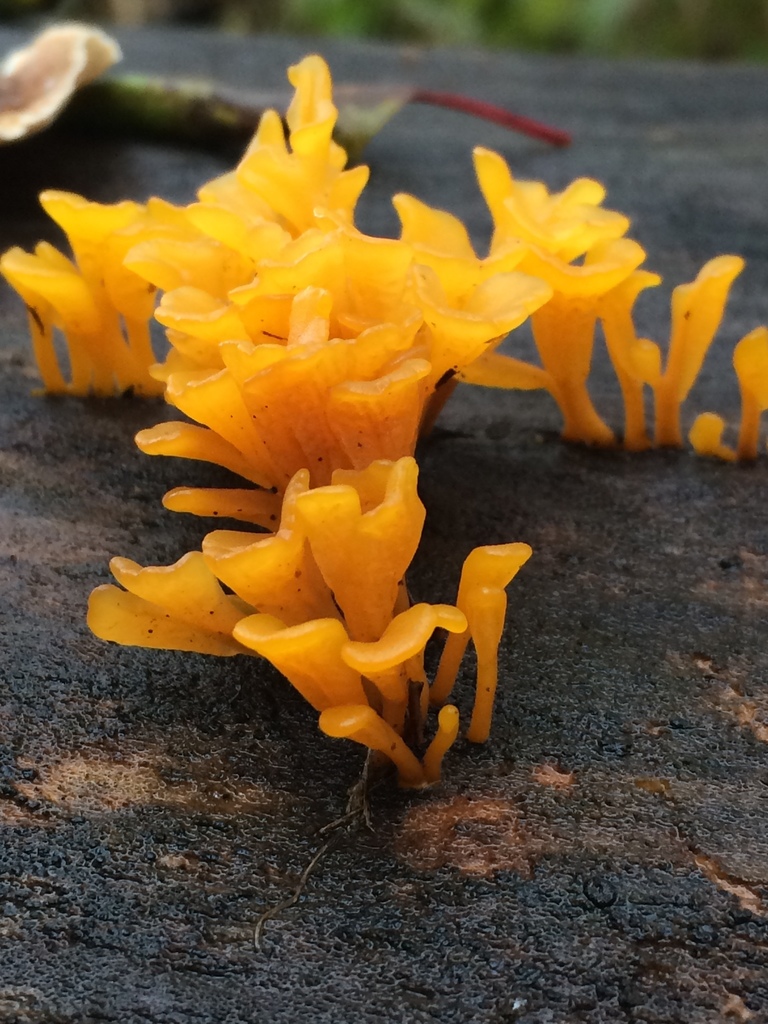
This summer, while working at an outdoor pool in East Tennessee, I found an interesting growth. It was during a week of heavy rain and I noticed what appeared to be the beginning of mushrooms sprouting on a piece of wood. I found this intriguing so I decided to continue observing it and investigate further. The image below shows what it looked like when I first came upon it.
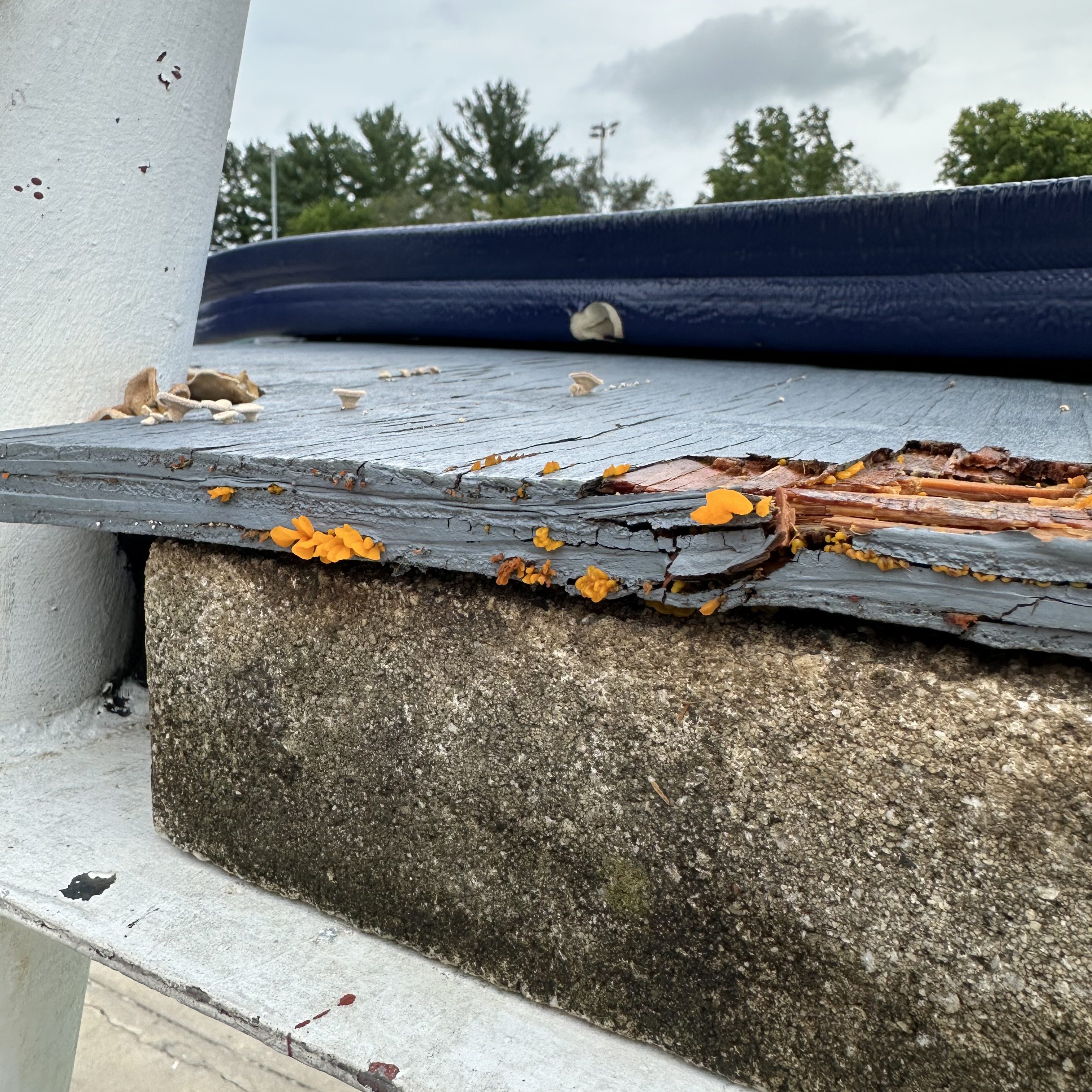
When I first saw this I tried to use Seek by iNaturalist, which is an app that helps identify species using photos, to identify it, however, it could only narrow it down to the phylum Basidiomycetes, which encompasses mushrooms, puffballs, and jelly fungi, based on this particular image. So after another week of growth and heavy rain, I observed the fungus again and it looked like this!
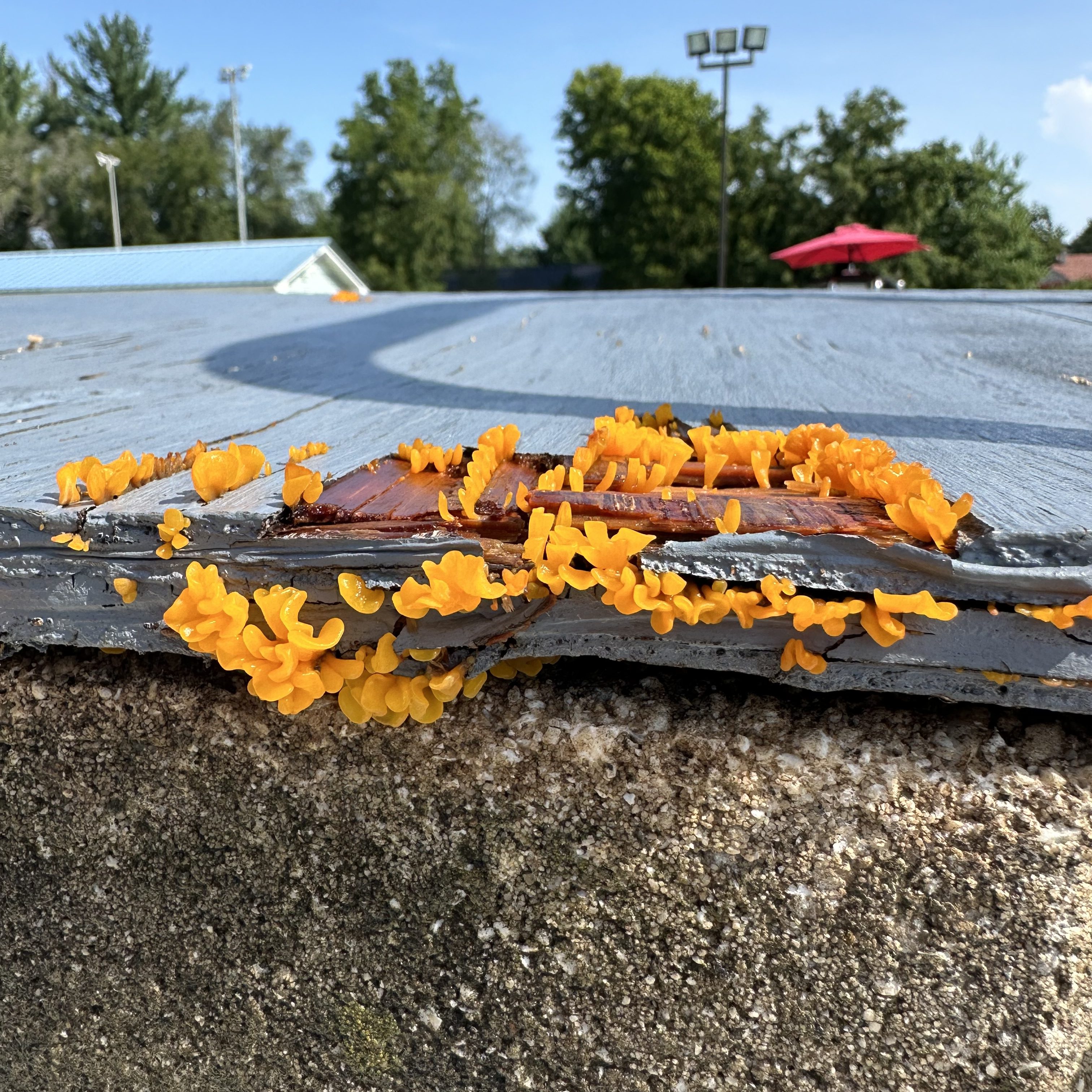
Since this wood was slightly decayed along with constant rain that kept the area humid and damp it provided the perfect conditions for fungal growth. Because the fungus had matured significantly, I was able to use Seek to identify this organism as Dacryopinax spathularia, otherwise known as Fan-shaped Jelly Fungus which has some surprising characteristics! 1,3
Dacryopinax spathularia
- This species is edible!
- This specific species actually contains a variety of nutrients including protein, carbohydrates, dietary fibers, vitamins, and minerals!
- Many mushrooms are edible such as white mushrooms, enoki mushrooms, and the Fan-shaped Jelly fungus! This is because the part that is typically seen, such as the cap of a mushroom, is actually a fruiting structure. While non-edible mushrooms also appear to have this same structure, they are considered inedible because they contain components that are poisonous.
- Not only is this species of fungus edible and sometimes used in a dish called Buddha’s Delight but it is also used in soft drinks. This is because it can be used to produce a long-chain glycolipid, which is a lipid that has a carbohydrate attached by a glycosidic bond and is found on the surface of all eukaryotic cell membranes, which is used as a natural preservative in those drinks.
- It has potential medicinal properties
- These properties are not all validated but are hypothesized because this species contains bioactive compounds that give potential health benefits such as boosting the body’s ability to fight off infections, antimicrobial effects, and potentially even the ability to reduce tumor growth and metastasis. 2
This discovery of the Fan-shaped Jelly Fungus is a great reminder of the incredible diversity and wonder of the natural world. So whether you’re a biology enthusiast or just curious about nature, there are always cool and new things to learn right in your backyard! Have you ever encountered interesting fungi in your area? Let me know in the comments!
References
- Minnesota Seasons – Fan-shaped Jelly Fungus. (2024). Minnesotaseasons.com. http://www.minnesotaseasons.com/Fungi/Fan-shaped_Jelly_Fungus.html
- Singh, A., & Sarma, S. (2023). Dacryopinax spathularia: A wild nutraceutical mushroom of India. ResearchGate. Retrieved from https://www.researchgate.net/publication/379219381_Dacryopinax_spathularia_a_wild_nutraceutical_mushroom_of_India
- Fan-shaped Jelly Fungus (Dacryopinax spathularia). (2024). INaturalist. https://www.inaturalist.org/taxa/143313-Dacryopinax-spathularia


 Emily's Biology Blog
Leave a reply to bhechmer Cancel reply