
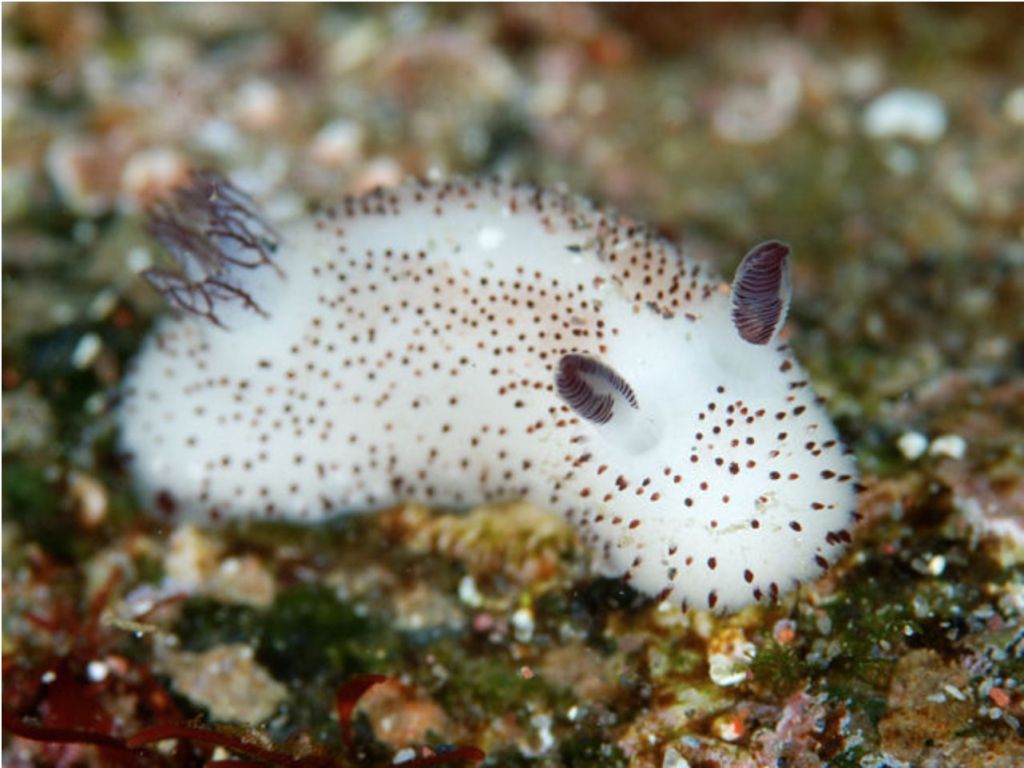
So what exactly is a sea slug?
The answer to this question is quite complex because sea slugs are incredibly diverse. The term “sea slug” is a general term for any snail or slug that lives in saltwater, and it is not a specific taxonomic group. In case you need a refresher on taxonomic levels, they are hierarchical categories used to classify organisms, with eight levels from highest to lowest: domain, kingdom, phylum, class, order, family, genus, and species. The term “sea slug” encompasses various clades within the class Gastropoda.
You may have heard the term “nudibranch” (noo-dee-brank) used interchangeably with “sea slug,” but this isn’t entirely accurate. While all nudibranchs are sea slugs, not all sea slugs are nudibranchs. Nudibranchs are a specific type of sea slug belonging to the order Nudibranchia, which is the most diverse and well-known order of sea slugs. Sea slugs are divided into several taxonomic orders, with the most prominent being:
- Sacoglassans: Slugs that feed on macroalgae and are famous for their ability to indirectly perform photosynthesis.
- Nudibranchs: Naked-gill slugs, known for their vibrant colors and diversity, mostly feeding on sponges and toxic sources.
- Cephalaspideans: Shell slugs that are mostly carnivorous; many species are in the process of losing the shell inherited from their snail ancestors.
- Pleurobranchs: Side-gill slugs, closely related to nudibranchs.
- Anaspideans: Sea hares, herbivorous slugs that can secrete toxins and deterrent fluids from their mantle.
Because this group is so diverse, it includes some of the most fascinating species. Some sea slugs even resemble other common animals, which is really cool! Unfortunately, most people have never heard of these organisms, so I wanted to share them with you. 9,10,11
Types of sea slugs that look like other animals
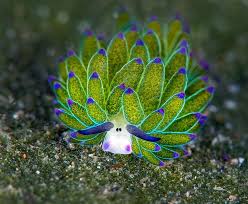
Leaf Sheep (or Leaf Slug)
- The scientific name is Costasiella kuroshimae
- The taxonomic order of this species is Sacoglassans
- These are shell-less marine opisthobranch gastropod mollusks
- Opisthobranch: an informal subclass
- Gastropod refers to the class and Mollusk is the phylum
- Despite being an animal it indirectly performs photosynthesis via kleptoplasty, in which they retain the chloroplasts from algae they eat which enables them to perform photosythesis
- They live in tropical climates and are mostly found near Japan, the Philippines, and Indonesia
- They have two eyes, and two rhinophores that look like sheep ears, hence the name leaf sheep
This species is so cute and interesting, and it’s currently one of my favorite animals. They’ve been getting some attention because Build-A-Bear recently launched a stuffed animal version of this species that you can buy online! 1,2

Sea Angel
- The scientific name is Gymnosomata, however this is not the name of a species but of a suborder which translates to “naked body”
- This is a group of small free-swimming sea slugs!
- The foot of these gastropods developed into wing-like flapping appendages and that is how they swim
- These are pelagic opisthobranch mollusks
- Pelagic means that the species lives in the open sea
- The diet of most species consists of sea butterflies
- This group has a wide geographic range from polar regions to equatorial seas
This is actually a suborder, not a species, but it’s such a special group because, despite being sea slugs, they can swim. When they do, they look like angels, shown in the image, which is how they got their name. 3,4
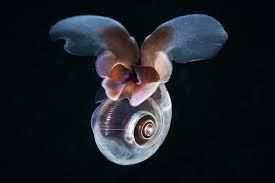
Sea Butterflies
- The scientific name for this suborder is Thecosomata, which means “case/ shell body”
- This is because this group consists of free-swimming sea snails!
- This group is very similar to the sea angels because the gastropod foot also formed into two lobes that propel it through the water
- This group is considered a sea snail because they have shells present in all stages of life
This is also a suborder rather than a species, and it can swim in the water! What makes this group different from sea angels is that it still has its shell, making it a sea snail rather than a slug. Unfortunately, it is often preyed upon by various species of sea angels. 5
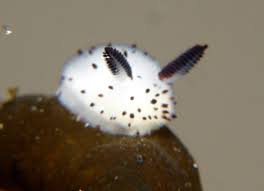
Sea Bunnies
- The scientific name for this species is Jorunna parva
- This is a shell-less marine gastropod mollusk
- Its taxonomic order is Nudibranchia
- It is called a sea bunny because it has black and white rhinophores that resemble rabbit ears
- Rhinophores: a pair of chemosensory ear-like structures
- Their diet consists of toxic sponges
- They are also hermaphrodites, which means that they produce both sperm and egg cells
This species is relatively popular because of its resemblance to a bunny, which makes it so cute. It is one of my favorites as well. 6
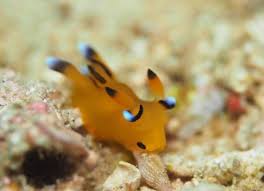
Pikachu sea slug
- The scientific name for this species is Thecacera pacifica and it is also a marine gastropod mollusk
- This species is also in the taxonomic order Nudibranchia
- This species has the nickname Pikachu sea slug because it resembles the Pokemon character
- The geographic range mostly consists of the African coast of the Indian Ocean to Indonesia
- This is a rare species and sightings are special 7,8
These are just a few of the most interesting sea slugs, but there are many others within Nudibranchia, such as the Blue Glaucus, Spanish Dancer, and Spanish Shawl. I might do another post that goes into more detail on these species, as well as some other nudibranchs, in the future. Which of these sea slugs did you like the most? Are there any you like that I didn’t mention? Leave a comment and let me know!
References
- Wikipedia contributors. (n.d.). Costasiella kuroshimae. In Wikipedia, The Free Encyclopedia. Retrieved August 21, 2024, from https://en.wikipedia.org/wiki/Costasiella_kuroshimae
- AlgaePlanet. (n.d.). Meet the leaf sheep. Retrieved August 21, 2024, from https://algaeplanet.com/meet-the-leaf-sheep/
- Monterey Bay Aquarium. (n.d.). Sea angel. Retrieved August 21, 2024, from https://www.montereybayaquarium.org/animals/animals-a-to-z/sea-angel
- Wikipedia contributors. (n.d.). Sea angel. In Wikipedia, The Free Encyclopedia. Retrieved August 21, 2024, from https://en.wikipedia.org/wiki/Sea_angel
- Wikipedia contributors. (n.d.). Sea butterfly. In Wikipedia, The Free Encyclopedia. Retrieved August 21, 2024, from https://en.wikipedia.org/wiki/Sea_butterfly
- Wikipedia contributors. (n.d.). Jorunna parva. In Wikipedia, The Free Encyclopedia. Retrieved August 21, 2024, from https://en.wikipedia.org/wiki/Jorunna_parva
- No Troubles Just Bubbles. (n.d.). Pikachu nudibranch. Retrieved August 21, 2024, from https://www.notroublesjustbubbles.com/marine-life/pikachu-nudibranch
- Wikipedia contributors. (n.d.). Thecacera pacifica. In Wikipedia, The Free Encyclopedia. Retrieved August 21, 2024, from https://en.wikipedia.org/wiki/Thecacera_pacifica
- Department of Biodiversity, Conservation and Attractions (DBCA). (n.d.). Nudibranchs (sea slugs). Retrieved August 21, 2024, from https://www.dbca.wa.gov.au/wildlife-and-ecosystems/marine/marine-parks/fun-facts/nudibranches-seaslugs#:~:text=What%20is%20a%20nudibranch%20or,Nudibranchs%20are%20gastropod%20molluscs.
- New Heaven Reef Conservation Program. (n.d.). Nudibranchs and other sea slugs. Retrieved August 21, 2024, from https://newheavenreefconservation.org/learning-resources/explore-topics/nudibranchs-and-other-sea-slugs
- Lim, S. (2024, May). Everything You Want to Know About Sea Slugs & Nudibranchs. Padi.com. https://blog.padi.com/everything-you-want-to-know-about-sea-slugs-nudibranchs/


 Emily's Biology Blog
Leave a comment