
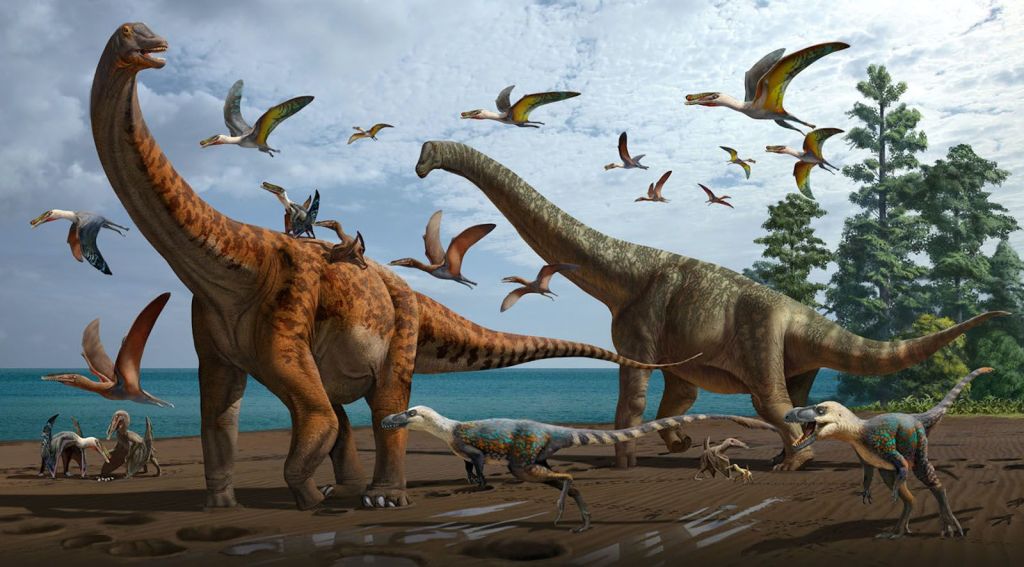
You’ve likely heard of the Jurassic Park franchise. In case you haven’t, the plot revolves around paleontologists who are visiting a theme park in which a billionaire has used prehistoric DNA to recreate dinosaurs and populate an island with them. Of course, this was a terrible idea since dinosaurs are wild animals that were not meant to be confined or used for entertainment. However, instead of discussing the ethics, I want to focus on how accurately the movie depicts these organisms, both in their physical appearances and the time periods they lived in.
Dinosaur Era
According to the geologic time scale, dinosaurs existed during these epochs of the Mesozoic era:
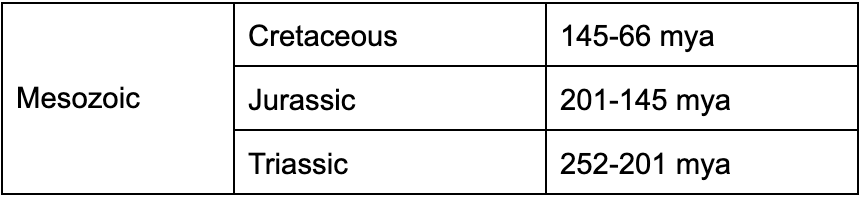
The title itself, Jurassic Park, can be misleading and make people believe that dinosaurs only existed during the Jurassic period when, in reality, they lived throughout the Triassic, Jurassic, and Cretaceous. All non-avian dinosaurs became extinct at the end of the Cretaceous due to the KT mass extinction event.
The movie depicts all the dinosaurs coexisting when that is not accurate. Millions of years separate some species of dinosaurs, making interactions between them in real life impossible.
Dinosaurs Featured in Jurassic Park
- Velociraptor: This genus lived during the Late Cretaceous, roughly 75-71 million years ago in what is now Asia
- Tyrannosaurus: This genus also existed during the Late Cretaceous, roughly 72.7-66 million years ago in what is now western North America
- Triceratops: This genus also lived during the Late Cretaceous in what is now western North America, roughly 68-66 million years ago
- Dilophosaurus: This genus lived in the early Jurassic, roughly 186 million years ago, in present day North America
- Brachiosaurus: This genus lived during the late Jurassic, roughly 154-150 million years ago, in present day North America
Not only did many of these dinosaurs not live at the same time, they also didn’t even all live in the same regions.
Science vs Hollywood
Jurassic Park is fiction, and while it brings dinosaurs to life, it also contains notable inaccuracies between what we know from science and what the franchise portrays.
Velociraptor
- In the movies, these dinos were designed based on a larger dinosaur called Deinonychus, but in reality, Velociraptors were around 2 feet tall, roughly the size of a modern day turkey.
- Although real raptors are believed to have been very intelligent, it is thought that this trait is exaggerated in the fictional organisms.
- Most importantly, these organisms are believed to have been covered in feathers which they did not depict in the franchise.
- This is how they are depicted in the franchise:
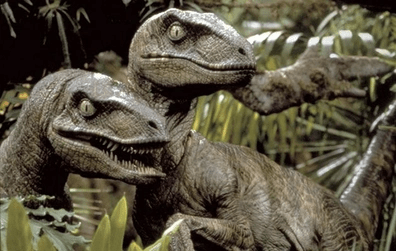
- Meanwhile, this is how they are actually believed to have looked:

Tyrannosaurus
- The depiction of the physical appearance of T. rex’s in Jurassic Park is mostly accurate although they may have been feathery as well.
- It is also suggested that they actually had lips rather than a giant grin showing their teeth, but this idea is still being researched

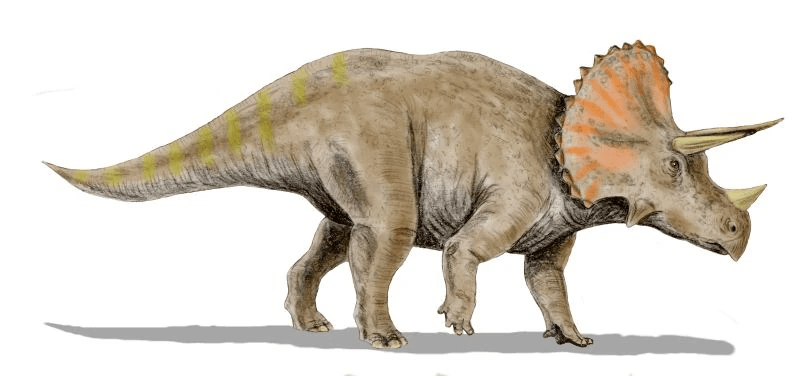
Triceratops
- These organisms were also depicted pretty accurately on a physical level although they seem to have been slightly longer than the franchise depicts.
Dilophosaurus
- There is no evidence that this group had a dramatic neck frill and spit venom, as depicted in the franchise.
- The actual organisms were larger than they were depicted in the franchise as well.

Brachiosaurus
- The movie depiction of these organisms is actually smaller than they most likely were.
- They were around 12 meters tall, which is about 40 feet, and roughly 112,000 pounds.
- The real Brachiosarus also had a disproportionatly small head compared to its long neck.
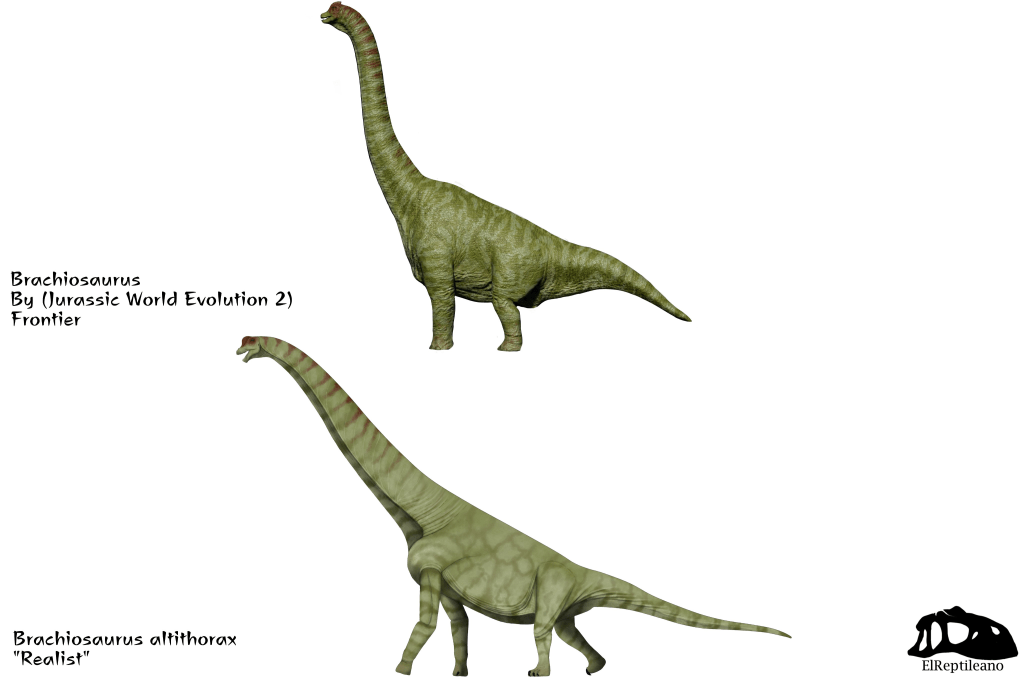
The aspects that Jurassic Park depicts inaccurately aren’t just physical characteristics of the dinos but also dinosaurs roaring, spitting venom, and the entire concept as a whole.
There are some very iconic scenes in which dinosaurs roar. Based on their recent ancestors and closest relatives, such as birds and crocodiles, it is unlikely that these creatures roared. For example, birds chirp and sing, and crocodiles growl and hiss. The closest sound that dinosaurs most likely made was a growl or rumble similar to crocodiles. These organisms have also been depicted spitting venom as a defense mechanism but there is no evidence to back up that idea.
The concept of the recreation of these dinos from a fossil of a blood-sucking insect that lived in the time period of dinosaurs is scientifically implausible. The problem with this is that DNA deteriorates over time. In fact, the oldest DNA fragments that have been recovered are around one million years old, which is far younger than dinosaurs. So, the idea that we could extract usable dinosaur DNA from fossilized mosquitoes is pure fantasy.
Conclusion
While Jurassic Park took many creative liberties in its portrayal of dinosaurs, it remains an exciting film that piques interest in paleontology. Understanding the inaccuracies can help us appreciate the real wonders of these ancient creatures even more. Should science fiction films be more accurate? Do you have a favorite dinosaur? Let me know in the comments! Don’t forget to like this post and subscribe to be notified when new posts are published. Thanks for reading!
Sources
Wikipedia contributors. “Tyrannosaurus.” Wikipedia, The Free Encyclopedia, link.
Children’s Museum of Indianapolis. “What Jurassic Park Gets Wrong.” The Children’s Museum of Indianapolis, link.
O’Brien, Jon. “Jurassic Park: 10 Dinosaurs the Movies Lied to You About.” Screen Rant, link.
Wikipedia contributors. “Velociraptors in Jurassic Park.” Wikipedia, The Free Encyclopedia, link.
Greshko, Michael. “Did T. rex Have Lips? New Study Suggests It May Have.” Science, link.
Kaplan, Sarah. “T. rex’s Teeth Were Likely Hidden Behind Its Lips, Study Suggests.” The Washington Post, 2023, link.
Natural History Museum. “Triceratops.” Natural History Museum, link.
“Dilophosaurus.” HowStuffWorks, link.
Prehistoric Tales. “Top Things Jurassic Park Got Wrong About Dinosaurs.” Medium, link.
Wikipedia contributors. “Velociraptor.” Wikipedia, The Free Encyclopedia, link.
Wikipedia contributors. “Tyrannosaurus.” Wikipedia, The Free Encyclopedia, link.
U.S. Geological Survey. “Mesozoic Era—Age of Dinosaurs.” USGS Youth and Education in Science, link.


 Emily's Biology Blog
Leave a reply to bhechmer Cancel reply