
What is a nudibranch?
I briefly talked about nudibranchs (noo-dee-brank) in my post about sea slugs, but I wanted to do a more in-depth dive into this fascinating group.
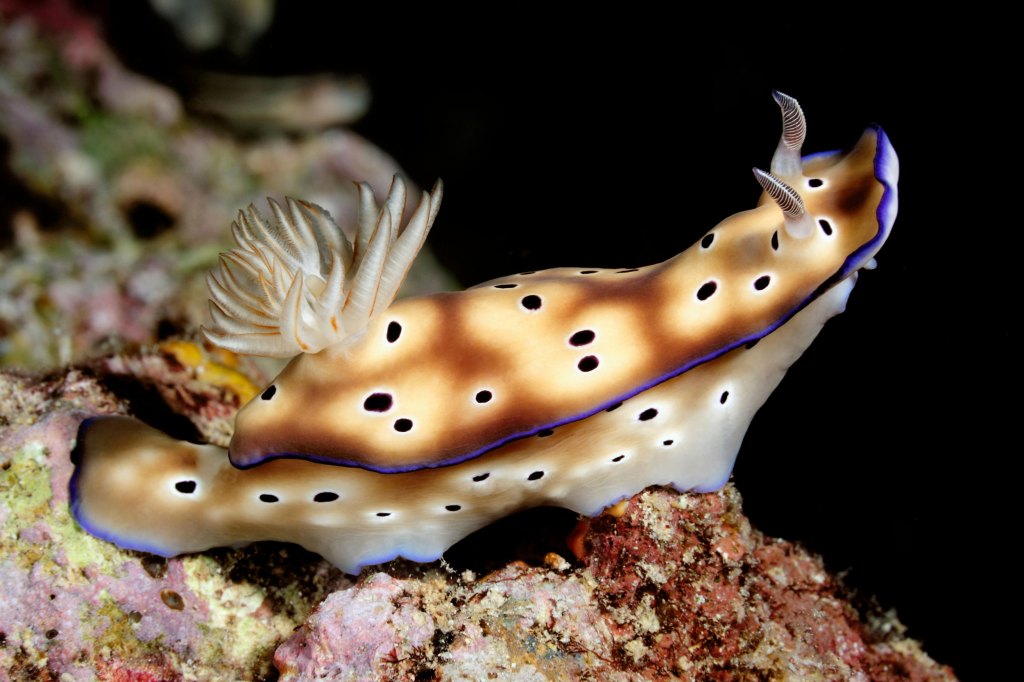
Nudibranchs are a type of sea slug, soft-bodied marine mollusks known for their stunning colors and variety of forms. The name “nudibranch” literally means “naked gills”, referring to the exposed gills or cerata on their backs. There are two main types of nudibranchs: Dorids and Aeolids.
Dorids have smooth backs with gill plumes on their back.
(Click to see an example!)
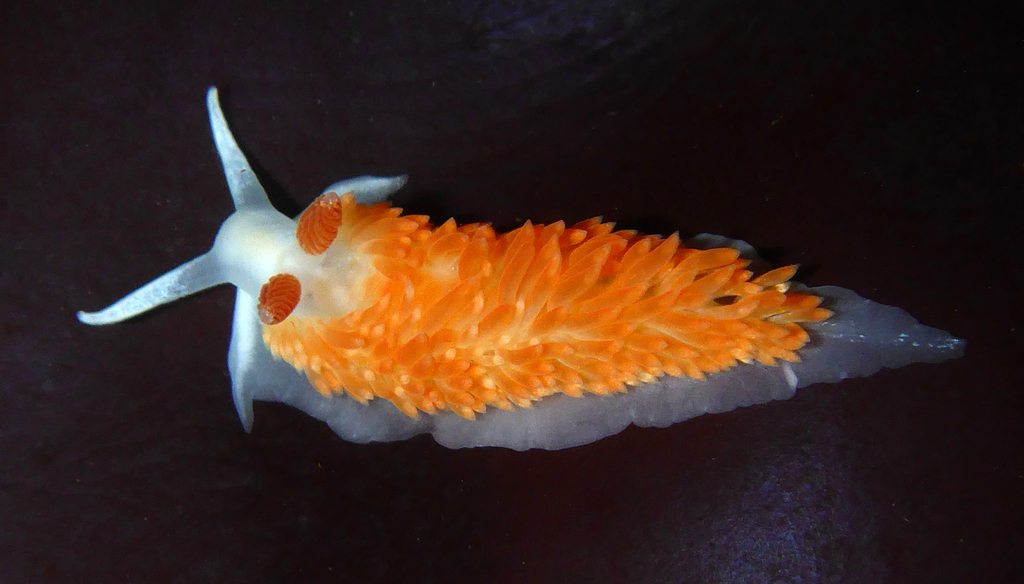
Aeolids are covered in cerata (tentacle-like structures used for breathing and stinging cell storage).
Nudibranchs are carnivores, so they eat sponges, anemones, hydroids, barnacles, and sometimes other nudibranchs. And yes, sponges and sea anemones are animals, NOT plants!
Their diets play a big role in their defenses and colors. Some species camouflage to avoid predators, while others are brightly colored to warn that they’re toxic. They become “toxic” by stealing nematocysts from their prey, like sea anemones, and reusing it as a defense. Nematocysts are stinging cells in tentacles of jellyfish and anemones that contain barbed thread that can be projected in self-defense.
Nudibranchs are also simultaneous hermaphrodites, meaning they have both male and female reproductive organs and can produce both sperm and eggs, so they are capable of fertilization of others but also self-fertilization!
With over 4,700 known species, nudibranchs can be found from the tropics to the poles. Here is a look into some of the common nudibranch species from different regions around the world.
Tropics
- Region: Indo-Pacific (Philippines, Indonesia, Great Barrier Reef)
- Why are they here? This is a biodiversity hotspot with tons of prey species
- Species:
Thecacera pacifica – Pikachu slug
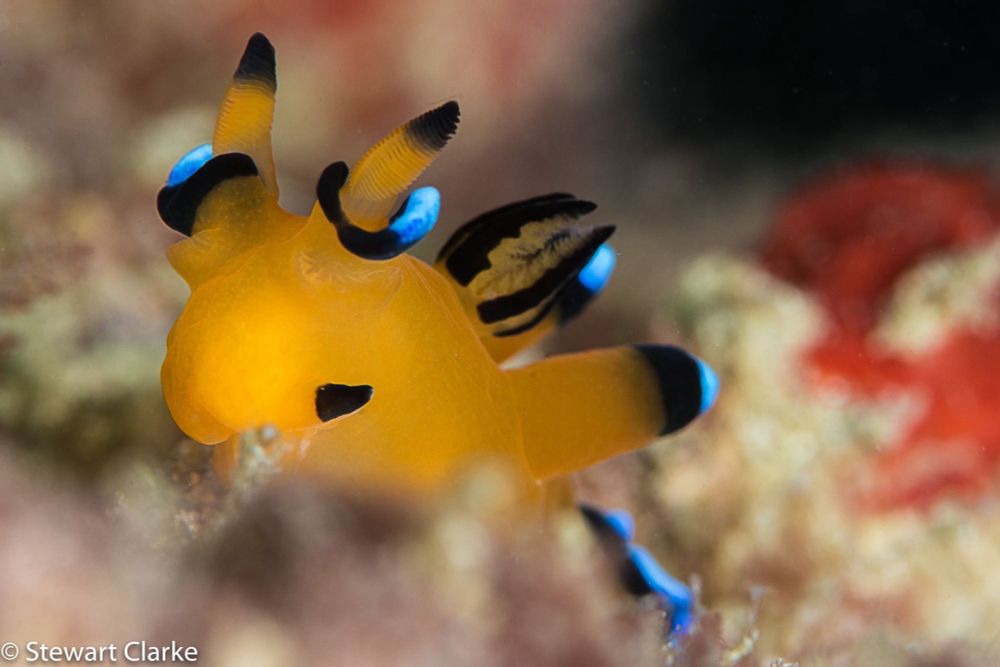
- Size: 2-3 cm
- Diet: bryozoan colonies (small colonial invertebrates found in the ocean)
- Habitat: Coral reefs, rocky rubble zones
- Reproduction: Lay coiled egg ribbons on bryozoan colonies
- Defense Mechanism: the bright coloration is a warning for predators that it is toxic
- Fun fact: The common name comes from its yellow-orange body and dark rhinophores that resemble ears!
Nembrotha kubaryana – Dusky Nembrotha
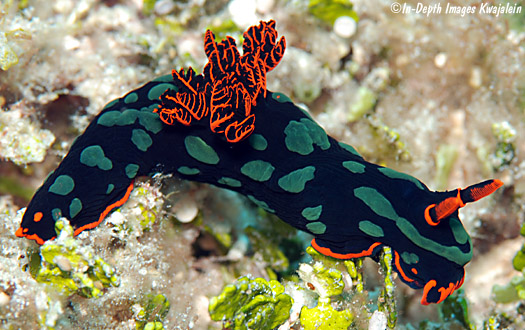
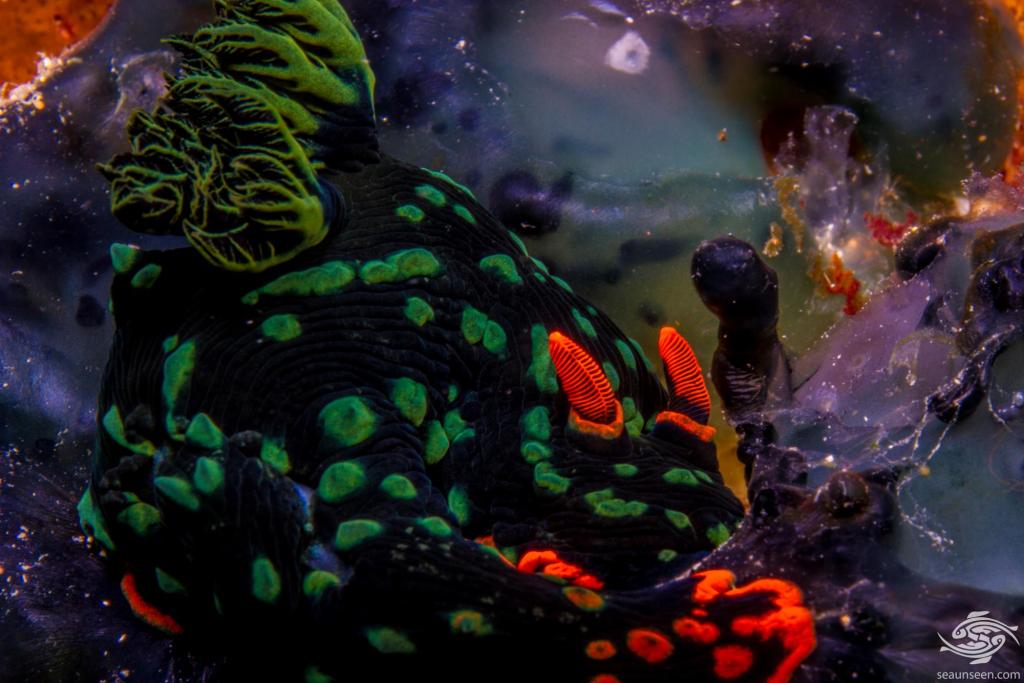
- Dorid! Could you tell by the gill plumes?
- Size: around 12 cm
- Diet: ascidians, aka colonial sea squirts (one is shown eating a sea squirt in the second image)
- Habitat: Coral reefs
- Defense mechanism: stores toxins from the ascidians in its tissues and then releases them when alarmed. They also flare their gills when they are disturbed.
- Fun fact: Their warning colors vary based on their diet
Hexabranchus sanguineus – Spanish Dancer
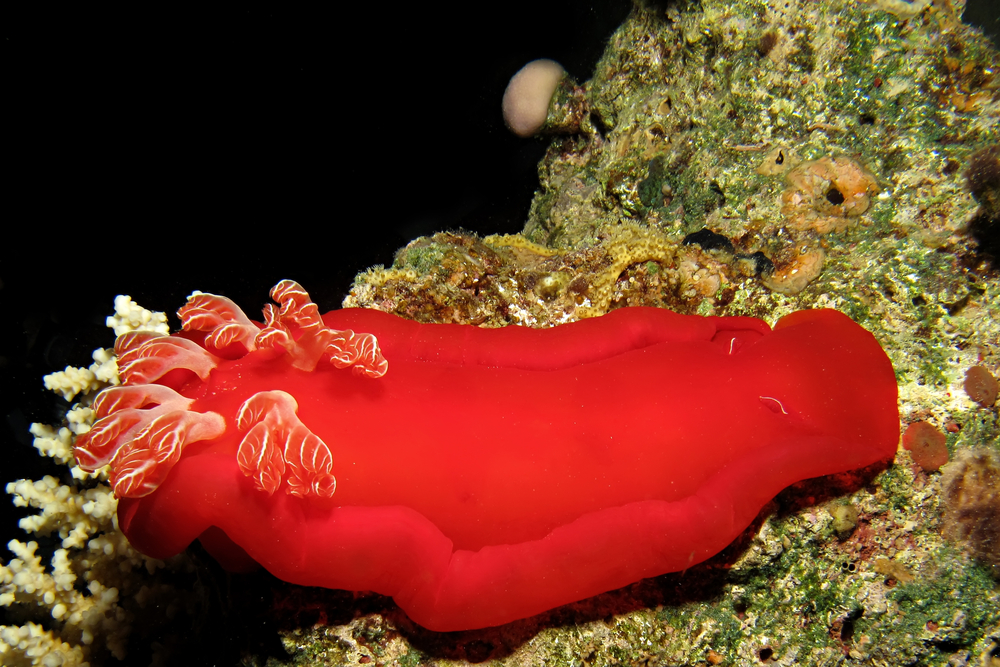
- Dorid!
- Size: 20-30 cm, this is huge for a nudibranch
- Diet: sponges and tunicates (sea squirts)
- Behavior: Nocturnal and often hide under coral during the day
- Defense mechanism: store toxins from the sponges for defense, it can also unfold and swim by contracting and undulating its body to move away from predators (here is a video of one swimming! VIDEO)
Polar
- Region: Arctic and Antarctic coastal waters
- Why are they here? The diversity is less than in tropical regions, but they still play a vital part in the ecosystem and have adapted to the cold water
- Species:
Cadlina laevis – White Atlantic Cadlina
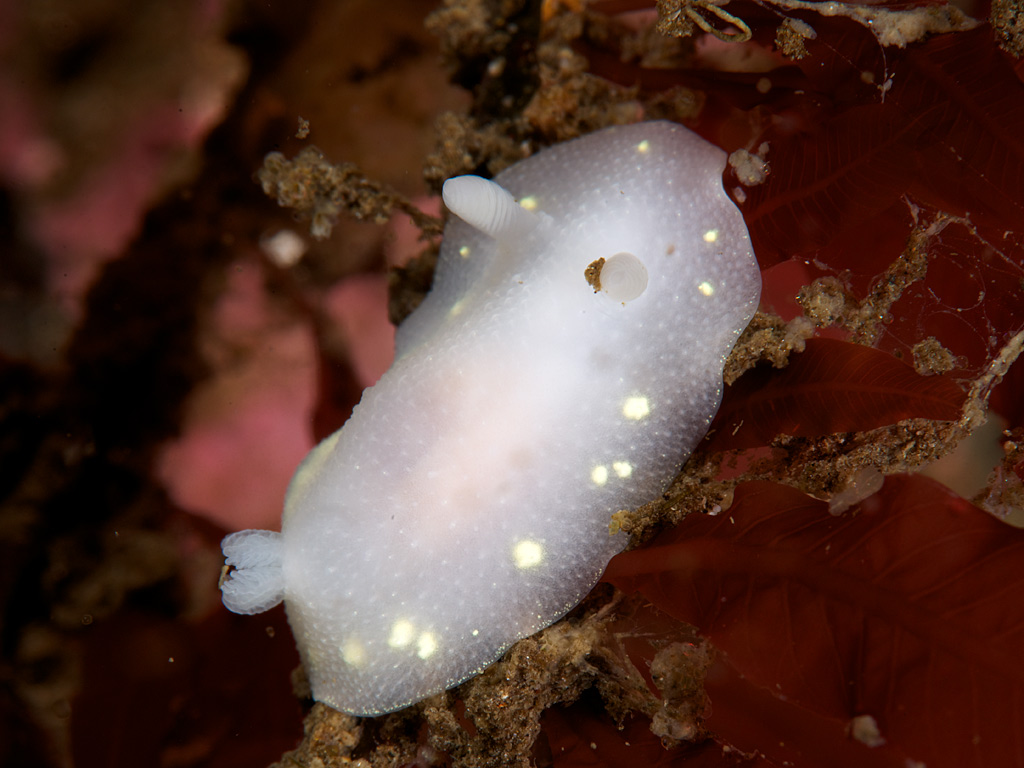
- Dorid!
- Size: 2.5-3.2 cm
- Diet: slime sponges and regular sponges
- Habitat: Cold rocky seafloors and kelp-covered shallows
- Defense mechanism: the yellow glands can secrete sulfuric acid as a defense
Dendronotus frondosus – Bushy-Backed Sea Slug
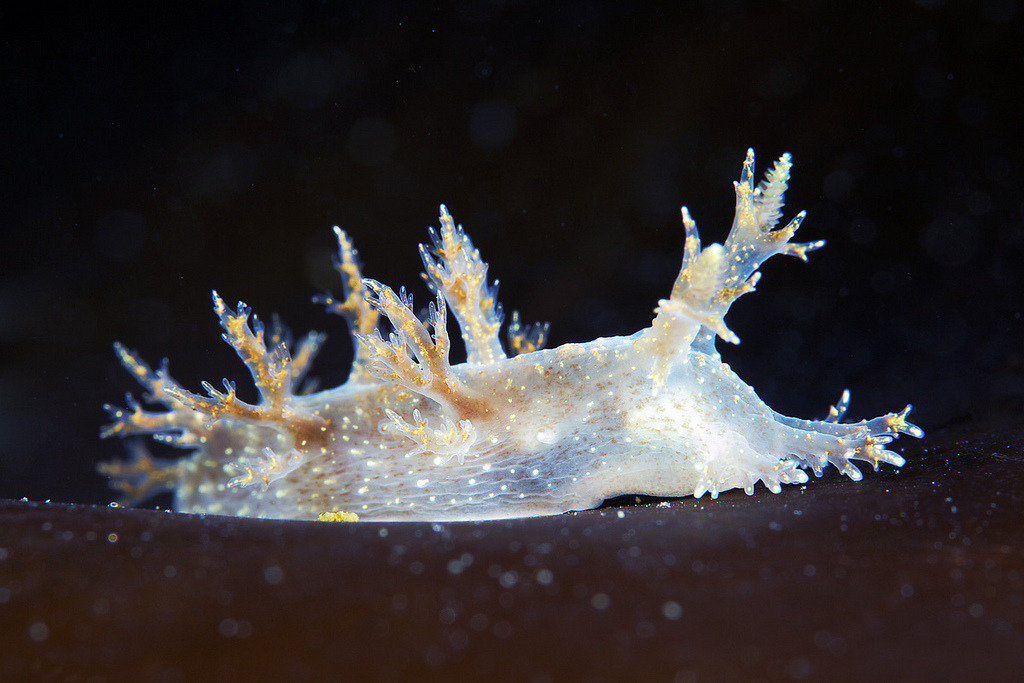
- Size: up to 10 cm
- Diet: hydroids (small sessile polyps related to jellyfish and coral)
- Habitat: coasts, near kelp forests or rocky shores
- Defense mechanism: uses nematocysts (stinging cells) from the hydroids it eats for its own defense, located at the ends of the branches on their backs (cerata)
Temperate Waters and Tidepools
- Regions: UK coasts, North American Pacific coasts, parts of Europe
- Why are they here? Variety of microhabitats with plenty of surfaces for algae, hydroids, and sponges to grow, making this region a perfect hunting ground for nudibranchs. These environments are also rich in seasonal changes, encouraging a wide range of specialized species to thrive.
- Species in the UK:
Flabellina pedata – Violet Sea Slug
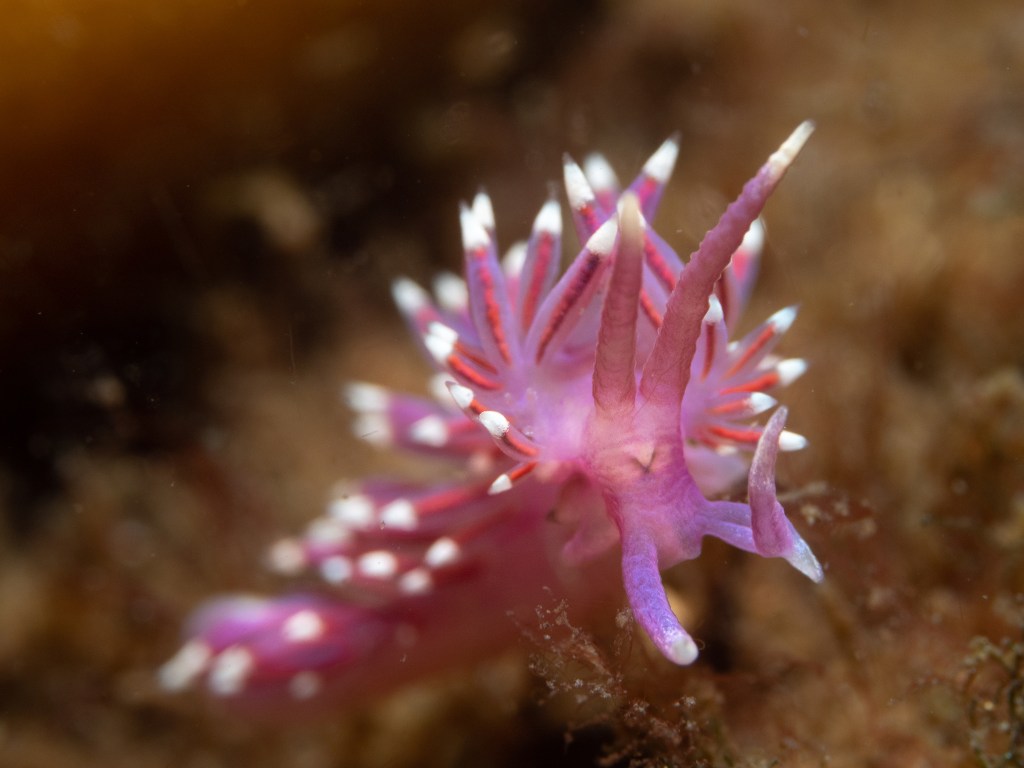
- Aeolid! Did you notice its back covered in cerata?
- Size: 5 cm
- Diet: hydroids
- Habitat: shallow, rocky intertidal zones
- Defense mechanism: it ingests and stores stinging cells from its food for defense
Limacia clavigera – Orange clubbed sea slug
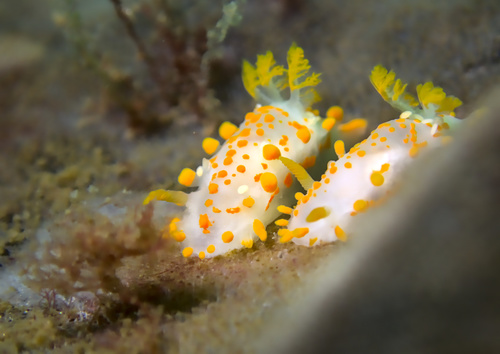
- Dorid!
- Size: 2 cm
- Diet: bryozoans and red algae or kelp
- Habitat: Rocky intertidal and subtidal zones
- Defense mechanism: some of the orange clubs have defensive glands that produce chemicals that taste bad to predators
- Species in North America:
Hermissenda crassicornis – Opalescent nudibranch
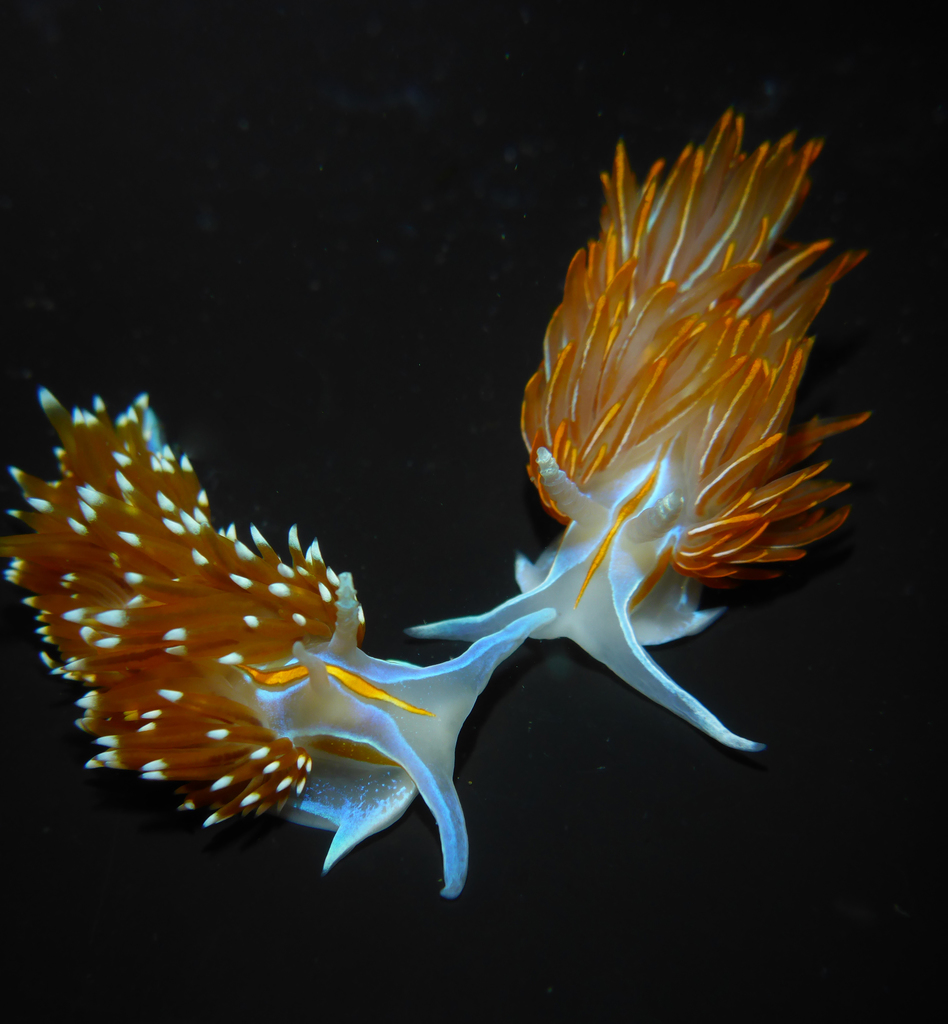
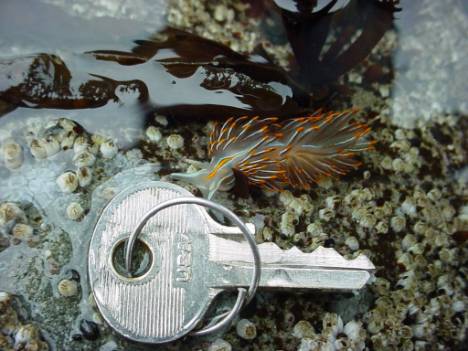
- Aeolid!
- Size: 8.25 cm
- Diet: hydroids, sponges, corals, and they’re sometimes cannibalistic and will eat other nudibranchs
- Habitat: tidepools, eelgrass beds, docks, and kelp forests
- Behavior: aggressive and sometimes cannibalistic
- Defense mechanism: Their cerata contain stinging cells that they get from the hydroids and anemones that they eat
Doris montereyensis – Monterey sea lemon
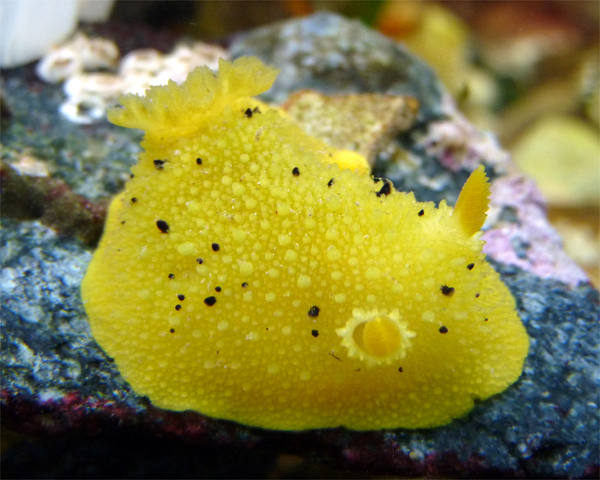
- Dorid!
- Size: 10-11.5 cm
- Diet: sponges
- Habitat: Rocky subtidal and kelp forests along the coast
- Defense mechanism: they store toxins from the sponges in their skin, making them poisonous to predators. Their color also comes from the sponges that they eat.
Diaulula sandiegensis – Leopard nudibranch
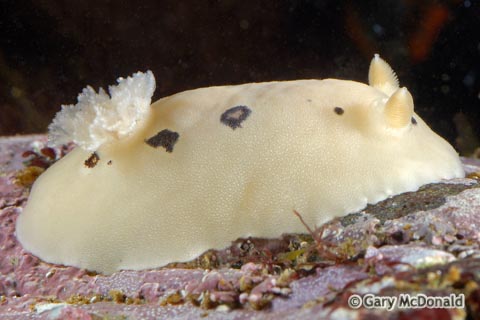
- Dorid!
- Size: 10 cm
- Diet: sponges
- Habitat: Rocky reefs and tidepools
- Defense mechanism: stores the toxic compounds from the sponges, making it taste bad and poisonous to predators
Why they matter
Nudibranchs, and sea slugs in general, are more than just really cute. They play an important ecological role and are considered excellent indicators of ocean health and biodiversity.
They’re also biological marvels:
- They steal stingers and repurpose them.
- Some can photosynthesize using stolen chloroplasts from algae.
- Others use camouflage or mimicry as a survival strategy.
- They show us how evolution gets creative with defense, diet, and design.
And despite all we know, new species are discovered every year. There’s so much left to learn about these brilliant, bizarre creatures.
Thank you so much for reading! Have a favorite nudibranch? Seen one in the wild? Let me know in the comments. If you enjoyed this post, check out Sea Slugs: Nature’s Most Unique Underwater Creatures and Coral Bleaching and Why You Should Care for more ocean-inspired reads.
And don’t forget to subscribe so you never miss a post!
Sources
Haystack Rock Awareness Program – Nudibranch species in Oregon tidepools link
Red Sea Creatures – Pikachu Nudibranch profile link
No Troubles Just Bubbles – Pikachu Nudibranch overview link
Dragon Dive Komodo – Spotting the Pikachu Nudibranch link
iNaturalist – Nembrotha kubaryana link
Sea Unseen – Nembrotha kubaryana profile link
iNaturalist – Hexabranchus sanguineus link
Oceana – Spanish Dancer overview link
iNaturalist – Cadlina laevis link
Runar Underwater – Sulfuric acid defense in sea slugs link
MarLIN – Cadlina laevis info page link
iNaturalist – Dendronotus frondosus link
MarLIN – Dendronotus frondosus profile link
Animal Diversity Web – Dendronotus frondosus account link
Smithsonian Ocean – How sea slugs steal defenses link
Wiltshire Wildlife Trust – Violet Sea Slug link
iNaturalist – Limacia clavigera link
The Wildlife Trusts – Orange Clubbed Sea Slug link
Animal Diversity Web – Hermissenda crassicornis link
Monterey Bay Aquarium – Opalescent Nudibranch link
National Marine Sanctuary Foundation – Monterey Sea Lemon feature link
Monterey Bay Aquarium – Sea Lemon profile link
iNaturalist – Nudibranch guide taxa (including Diaulula sandiegensis) link
SeaLifeBase – Diaulula sandiegensis summary link
The Wildlife Trusts – What is a nudibranch? link
Natural History Museum – Nudibranchs: Psychedelic thieves of the sea link
Smithsonian Ocean – Collage of nudibranch colors link
National Geographic – Nudibranch Facts link


 Emily's Biology Blog
Leave a reply to bhechmer Cancel reply